Category: AI Journal

  • Social Champ Launches #SociallySecure, Urging Marketers to Reconsider the Ethics of the Tools They Use

    Campaign sparks industry-wide conversation on responsible technology use in social media management

    Newark, DE, April 9, 2026, ZEX PR WIRE Social Champ today announced the launch of #SociallySecure, a campaign designed to prompt marketers, agencies, and brands to rethink the broader impact of the social media management tools they rely on every day.

    The initiative comes at a time when questions around data usage, accountability, and the role of marketing technology in non-marketing contexts are becoming increasingly difficult to ignore.

    Rather than positioning tools as purely functional software, #SociallySecure reframes them as value-driven choices — encouraging professionals to consider not just what tools do, but how they are used.

    “This is a conversation the industry has avoided for a long time,” said Sameer Ahmed Khan, Founder and CEO of Social Champ. “The tools we use to build trust with audiences don’t exist in isolation. It’s worth asking where else that same technology is being applied.”

    The Campaign

    #SociallySecure is built as a multi-platform initiative aimed at encouraging open dialogue around responsible technology use.

    Creators, marketers, and industry professionals have joined the conversation across platforms, sharing perspectives on ethical tool selection, transparency, and accountability in SaaS.

    The campaign invites the industry to engage with questions such as:

    • What responsibilities do technology providers have beyond their direct customers?
    • Where should companies draw the line on how their tools are used?
    • Can ethical positioning become a meaningful differentiator in SaaS?

    As part of this broader shift, some professionals have already begun re-evaluating their tool choices, citing both ethical considerations and practical concerns such as pricing, flexibility, and usability.

    To support those looking to make an immediate change, Social Champ is also offering a limited-time migration initiative, providing three additional months free for users switching from other platforms. The offer is designed to reduce the friction for professionals whose budgets or contracts are tied to tools they no longer feel aligned with.

    The Ad

    At the center of the campaign is a satirical AI-generated ad that approaches the topic through humor and contrast, highlighting the gap between how social media tools are marketed and how they may be perceived in a broader context.

    Rather than making direct claims, the ad focuses on a simple idea:
    marketers deserve tools that align with the values they promote.

    The creative has been positioned not just as a promotional asset, but as a conversation starter , designed to provoke reflection rather than deliver a traditional product message.

    The Internet Is Already Talking

    Within days of launch, marketers began dissecting the campaign across platforms like Reddit, where a post in r/SocialMediaMarketing described the ad as:

    “the most aggressive campaign the social media management industry has seen this year.”

    The post referenced Social Champ’s satirical AI-generated video, which appears to take aim at a significantly larger competitor amid ongoing discussions around data usage and industry accountability.

    Another user wrote:

    “In an industry full of AI-generated corporate fluff, seeing a brand actually use their ‘social listening’ to highlight ethical gaps is kind of refreshing.”

    The discussion quickly evolved beyond the ad itself, raising broader questions about ethics, pricing, and trust in marketing tools.

    A Broader Industry Shift

    #SociallySecure reflects a wider shift in how marketing technology is evaluated.

    Social media management platforms are no longer seen as purely operational tools. They collect, analyze, and interpret large volumes of user data — capabilities that carry different implications depending on how and where they are used.

    This has led to increased scrutiny around vendor relationships, data practices, and the downstream impact of software products.

    By addressing these concerns directly, Social Champ is positioning ethical accountability as part of the competitive landscape, rather than a secondary consideration.

    “We believe technology companies should be accountable not just for what they build, but for how it is used,” Khan added. “Marketers have more influence than they think in shaping those standards.”

    About Social Champ

    Social Champ is a social media management platform serving marketers, agencies, and businesses worldwide. The platform supports multiple social networks, offers centralized engagement tools, and provides team collaboration features designed for growing organizations.

    The company maintains a public commitment to ethical business practices, including a stance against contracting with government surveillance or enforcement agencies.

    Learn more: https://www.socialchamp.com/socially-secure-alternative/

  • Top 10 Best AI Tools for Accountants in 2026

    Top 10 Best AI Tools for Accountants in 2026

    Introduction: The Rise of the AI-Augmented Accountant

    Accounting has historically been associated with manual reconciliation, spreadsheets, and long hours spent verifying financial records. But as businesses digitize operations and financial data grows exponentially, the traditional model of accounting is rapidly evolving.

    Artificial intelligence is now transforming the profession. AI systems can analyze vast financial datasets, detect anomalies, automate repetitive tasks, and generate predictive financial insights within seconds. What once required hours of manual review can now be handled through intelligent automation.

    The result is a major shift in the profession. Instead of acting as “number crunchers,” accountants are increasingly becoming strategic financial advisors, leveraging AI-powered tools to interpret financial patterns and guide business decisions.

    Industry analysts describe this transition as a “cognitive pivot,” where AI moves from a simple assistant to a central workflow engine within accounting operations.

    As we enter 2026, AI tools are becoming essential for accounting professionals, enabling faster processing, improved compliance, and deeper financial insights.

    In this guide, we explore the 10 best AI tools for accountants in 2026 and how they are reshaping modern financial workflows.


    How AI Is Transforming Accounting Workflows

    The accounting profession is undergoing one of its most significant transformations in decades.

    AI-driven accounting platforms now help firms automate complex financial processes such as reconciliation, fraud detection, tax research, and financial forecasting. Instead of simply storing financial data, modern systems can actively analyze it and recommend actions.

    One of the most significant developments is the emergence of Agentic AI systems—tools capable of planning and executing multi-step financial tasks autonomously, such as researching tax regulations or identifying anomalies in financial statements.

    This shift allows accountants to focus less on administrative tasks and more on strategic roles like financial planning, regulatory advisory, and risk analysis.

    Research suggests that AI-powered accounting systems can reduce transactional processing time by more than 70% while significantly improving data accuracy and anomaly detection.

    However, successful adoption depends not only on technology but also on selecting the right AI tools designed specifically for financial professionals.


    What Accountants Should Look for in AI Tools

    Before choosing an AI solution, accounting professionals should evaluate tools based on several key capabilities.

    Automation of repetitive financial tasks

    AI tools should automate processes such as reconciliation, invoice matching, and journal entries.

    Intelligent anomaly detection

    Machine learning algorithms should be able to detect irregular transactions, potential fraud, or compliance issues.

    Financial forecasting and analytics

    Advanced AI tools can analyze financial trends and generate predictive insights for strategic planning.

    Integration with accounting software

    Compatibility with platforms like QuickBooks, Xero, SAP, and ERP systems is essential.

    Security and compliance

    Since financial data is highly sensitive, AI platforms must provide enterprise-grade security and regulatory compliance.

    With these criteria in mind, here are the top AI tools helping accountants streamline financial operations in 2026.


    The 10 Best AI Tools for Accountants in 2026

    1. MindBridge

    MindBridge is an AI-driven financial risk intelligence platform designed to help accountants analyze 100% of financial transactions rather than relying on sampling.

    The platform uses machine learning models to identify anomalies, fraud risks, and unusual financial patterns across massive datasets.

    MindBridge is widely used by auditors and financial teams seeking deeper visibility into financial data.

    Key features

    • AI-powered anomaly detection
    • Full transaction analysis
    • Risk scoring and insights
    • Fraud detection models
    • Audit workflow integration

    2. BlackLine

    BlackLine is a leading financial automation platform that focuses on improving financial close processes and account reconciliation.

    Its AI capabilities help automate transaction matching, monitor financial workflows, and ensure compliance across accounting operations.

    The platform is particularly popular among large enterprises managing complex financial operations.

    Key features

    • Automated account reconciliation
    • AI transaction matching
    • Financial close management
    • Compliance monitoring
    • ERP integration

    3. Numeric

    Numeric is a modern accounting automation platform designed for high-growth startups and finance teams.

    It helps automate financial reporting, reconciliation workflows, and anomaly detection while maintaining full visibility into financial operations.

    The platform is known for its intuitive interface and automation capabilities.

    Key features

    • Automated reconciliation workflows
    • Real-time financial insights
    • AI anomaly detection
    • Financial reporting automation
    • Integration with modern finance stacks

    4. Hebbia

    Hebbia focuses on document reasoning using AI, enabling accountants and financial analysts to analyze large financial documents such as contracts, SEC filings, and credit agreements.

    Instead of manually reading hundreds of pages, users can ask AI to analyze and extract insights across complex documents.

    This makes Hebbia particularly useful for financial analysts and advisory teams.

    Key features

    • AI document reasoning
    • Large-scale document analysis
    • Contract and financial filing analysis
    • Workflow automation
    • Context-aware insights

    5. Vic.ai

    Vic.ai is an autonomous accounting platform designed to automate accounts payable workflows.

    Using machine learning, the system learns from historical financial data and continuously improves invoice processing accuracy.

    Vic.ai is widely adopted by finance teams aiming to reduce manual data entry and improve operational efficiency.

    Key features

    • Autonomous invoice processing
    • AI-driven expense classification
    • Automated approvals
    • ERP integrations
    • Continuous machine learning optimization

    6. ChatGPT Enterprise

    Large language models such as ChatGPT Enterprise are increasingly used by accounting professionals as research and workflow assistants.

    They can summarize financial documents, generate financial models, draft reports, and assist with complex spreadsheet formulas.

    Many firms now use LLMs as part of their broader accounting tool stack.

    Key features

    • Financial research assistance
    • Document summarization
    • Spreadsheet formula generation
    • Workflow automation
    • Secure enterprise deployment

    7. Power BI

    Microsoft Power BI remains one of the most powerful data visualization tools for finance teams.

    When integrated with AI analytics, Power BI enables accountants to convert raw financial data into actionable dashboards and predictive financial insights.

    This makes it particularly valuable for CFOs and financial strategists.

    Key features

    • AI-powered financial analytics
    • Interactive dashboards
    • Predictive financial modeling
    • Integration with Microsoft ecosystem
    • Advanced reporting tools

    8. Tableau

    Tableau is another powerful data analytics platform widely used by finance professionals.

    Its AI-powered analytics features allow accounting teams to visualize complex financial data and uncover trends across financial datasets.

    Key features

    • Data visualization and analytics
    • AI-driven insights
    • Interactive financial dashboards
    • Predictive analytics
    • Enterprise data integrations

    9. CaseWare IDEA

    CaseWare IDEA is an advanced data analysis tool used by auditors and accounting professionals to analyze financial datasets.

    It helps identify patterns, anomalies, and potential fraud risks within financial records.

    The platform is particularly useful in audit environments.

    Key features

    • Data analytics for auditors
    • Fraud detection capabilities
    • Financial data mining
    • Automated audit workflows
    • Large dataset analysis

    10. StackAI

    StackAI enables accountants to build customized AI workflows without heavy coding.

    The platform allows finance professionals to automate complex workflows such as financial reporting, regulatory analysis, and data processing.

    Key features

    • AI workflow automation
    • Custom AI assistants
    • Integration with finance tools
    • Document processing automation
    • No-code AI workflow builder

    How Accountants Are Using AI Tools in Practice

    Most accounting firms are not relying on a single AI platform. Instead, many professionals are adopting what industry experts describe as the “four-tool stack” approach.

    This typically includes:

    1. Document reasoning AI for financial document analysis
    2. Accounting automation platforms for reconciliation and transaction processing
    3. Data visualization tools for financial reporting and dashboards
    4. General AI assistants for research and workflow support

    By combining specialized tools, accounting professionals can automate repetitive tasks while maintaining human oversight over strategic financial decisions.


    The Future of AI in Accounting

    The role of the accountant is rapidly evolving.

    Rather than replacing finance professionals, AI is eliminating repetitive tasks such as invoice matching, transaction coding, and manual reconciliation.

    This shift is creating a new category of professionals sometimes described as “Accountant 2.0” — experts who combine financial expertise with AI literacy and data analysis skills.

    Demand for such hybrid professionals is rising rapidly, with organizations seeking finance experts capable of both interpreting AI-generated insights and managing advanced financial systems.

    In the coming years, the most successful accounting teams will be those that effectively combine human judgment with AI-driven financial intelligence.


    Final Thoughts

    Artificial intelligence is no longer a futuristic concept in accounting—it is becoming the foundation of modern financial operations.

    From automated reconciliations to predictive financial insights, AI tools are enabling accountants to move beyond spreadsheets and become strategic advisors to businesses.

    For finance professionals looking to stay competitive in 2026 and beyond, adopting the right AI tools will be essential.

    The question is no longer whether AI will transform accounting—but how quickly firms will adapt to the new era of intelligent finance.

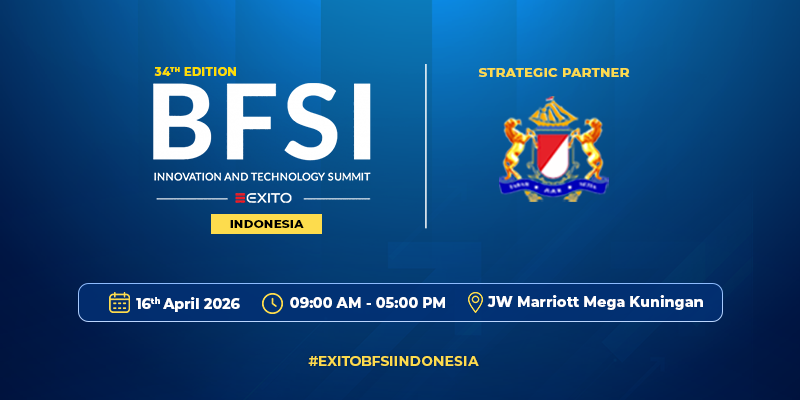
  • Exito Media Concepts Announces the 34th Edition of the BFSI IT Summit Indonesia 2026 Tech it to the Next Level: Shaping the Future of Indonesia’s BFSI

    • 16th April 2026 | JW Marriott Mega Kuningan, Jakarta | 09:00 AM – 05:00 PM

    Jakarta, Indonesia, 10th April 2026, ZEX PR WIRE  — Exito Media Concepts, a globally recognized leader in B2B technology events, is proud to announce the 34th Edition of the BFSI IT Summit Indonesia 2026, the country’s foremost gathering of banking, financial services, and insurance (BFSI) technology leaders. The summit will take place on 16th April 2026 at the JW Marriott Mega Kuningan, Jakarta, bringing together over 150+ CIOs, CTOs, and digital transformation leaders to chart the future of financial services technology in Indonesia.

    Indonesia’s BFSI sector is at an inflection point. As fintech innovation accelerates, digital banking platforms proliferate, and artificial intelligence reshapes risk and customer engagement, financial institutions across the country are racing to modernize their technology foundations. The BFSI IT Summit Indonesia serves as the premier strategic platform where technology leaders convene to exchange insights, explore real-world solutions, and collectively drive the digital transformation agenda forward.

    “Indonesia’s financial institutions are not just adapting to digital transformation — they are defining it. This summit is where that vision takes shape.”

    Indonesia’s BFSI Sector at the Forefront of Digital Innovation
    Indonesia’s BFSI sector continues to be a cornerstone of the nation’s economic growth, underpinned by a rapidly expanding digital economy and ambitious financial inclusion initiatives. The rise of fintech companies and digital-first banking models has fundamentally intensified competition, compelling traditional financial institutions to reimagine their operating models and double down on innovation.
    Customer expectations for seamless mobile-first experiences and real-time financial services are driving unprecedented investment in modern technology infrastructure. Simultaneously, organizations must navigate a complex regulatory landscape governed by OJK and Bank Indonesia, all while integrating legacy systems with next-generation digital platforms, a challenge that remains central to the sector’s transformation journey.

    In Focus: Driving Digital Transformation in Indonesia’s Banking Sector
    A leading Indonesian financial institution recently executed a landmark digital transformation, transitioning from legacy core banking infrastructure to a scalable, cloud-enabled architecture. Deploying a hybrid cloud strategy alongside advanced AI and data analytics capabilities, the institution unlocked deeper customer insights and delivered more personalized financial offerings.
    Automation technologies were rolled out across core processes, dramatically reducing manual intervention and accelerating transaction speed and accuracy. A reinforced cybersecurity framework ensured regulatory compliance, while a focused workforce upskilling programme embedded a culture of digital agility. The outcome: measurably improved customer satisfaction, stronger operational resilience, and a sharpened competitive edge in Indonesia’s fast-evolving BFSI market.

    Event Overview
    The 34th Edition of the BFSI IT Summit Indonesia 2026 forms part of a globally recognized summit series hosted across the world’s leading financial hubs. This edition will convene over 150+ CIOs, CTOs, Heads of IT, Digital Transformation Leaders, and senior technology decision-makers from across Indonesia’s banking, financial services, and insurance ecosystem.
    Through expert-led keynotes, high-impact panel discussions, and real-world case studies, the summit will explore the innovative strategies, emerging technologies, and proven best practices that enable financial institutions to enhance customer experiences, strengthen operational resilience, and drive sustainable digital growth.

    Date: 16th April 2026
    Time: 09:00 AM to 05:00 PM
    Venue: JW Marriott Mega Kuningan, Jakarta
    Attendees: 150+ CIOs, CTOs, Heads of IT, Digital Transformation Leaders
    Website: https://bfsiitsummit.com/indonesia/
    Summit Agenda: Key Technology Priorities for 2026

    Expert-led sessions, immersive panel discussions, and live case studies will address the most pressing challenges and opportunities across Indonesia’s BFSI technology landscape, including:
    • Cloud & Hybrid Infrastructure: Building a scalable digital core while navigating regulatory frameworks and data residency requirements.
    • AI/ML for Risk & Growth: Leveraging artificial intelligence and machine learning to enhance decision-making, risk management, and revenue growth.
    • Unified Data Platforms: Enabling seamless data integration to drive efficiency, insights, and innovation across financial services.
    • Open Banking & API Economy: Moving from regulatory compliance to value creation through API-driven ecosystems.
    • Inclusion Tech: Expanding financial access through mobile-first and data-driven solutions to support nationwide financial inclusion.
    • Cybersecurity and Data Protection: Strengthening security frameworks to safeguard sensitive financial data and ensure full regulatory compliance.
    • Core Banking Modernization: Transitioning from legacy systems to agile, cloud-enabled platforms.
    • Automation & Intelligent Process Management: Improving operational efficiency through automation and AI-driven workflows.

    About Exito Media Concepts
    Exito stands for “success”, a principle that defines every experience we design. With over 15 years of global expertise, Exito is a leading B2B events and media organization delivering over 240 conferences annually across technology, digital transformation, cybersecurity, healthcare, and emerging enterprise sectors. Through meticulously curated agendas, world-class speaker communities, and market-driven insights, Exito creates platforms that foster strategic collaboration, accelerate innovation adoption, and deliver measurable business outcomes worldwide.

    Media Contact
    Prakruthi Nayaka
    Media and PR Executive, Exito Media Concepts
    Email: prakruthi.nayaka@exito-e.com
    Website: https://bfsiitsummit.com/indonesia/

  • TRON Announced as Title Sponsor for Hong Kong Web3 Festival 2026

    Hong Kong, 10th April 2026, ZEX PR WIRE — Hong Kong Web3 Festival 2026 is honored to have TRON onboard as a Title Sponsor.

    TRON DAO is a community-governed DAO dedicated to accelerating the decentralization of the internet via blockchain technology and dApps.

    Founded in September 2017 by H.E. Justin Sun, the TRON blockchain has experienced significant growth since its MainNet launch in May 2018. Today, TRON is one of the largest networks for USD Tether (USDT) stablecoin circulation, with an on-chain supply exceeding $85.4 billion. As of April 2026, the TRON blockchain has recorded over 374 million in total user accounts, more than 13.62billion in total transactions, and over $22billion in total value locked (TVL), based on TRONSCAN. Recognized as the global settlement layer for stablecoin transactions and everyday purchases with proven success, TRON is “Moving Trillions, Empowering Billions.” Read more at: https://trondao.org/

    Hong Kong Web3 Festival (“Web3 Festival”), co-hosted by Wanxiang Blockchain Labs and HashKey Group, is Asia’s premiere crypto conference since 2023. The previous editions brought together over 350 exhibitors and more than 1,200 speakers for in-depth discussions, attracted a cumulative total of 100,000 visitors, and saw over 400 diverse side events. It has solidified its status as a leading crypto event, influencing Hong Kong’s Web3 landscape.

    Following the sellout success of its previous editions, Hong Kong Web3 Festival has announced its return on 20–23 April at HKCEC. Now in its 4th year, this four-day event will once again bring tens of thousands of Web3 professionals, investors, and enthusiasts across the globe to connect, learn and be inspired.

    Web3 Festival 2026 has set the agenda for Web3 growth and innovation, focusing mainly on traditional finance and crypto finance, AI + Web3, and RWAs.

    The conference will also convene top experts and leading Web3 projects to exchange ideas, share best practices and gain perspectives on today’s evolving Web3 landscape.

    Featured speakers include:

    Paul CHAN Mo-po, GBM, GBS, MH, JP, Financial Secretary of the Government of  Hong Kong

    Mr Joseph H. L. CHAN, JP, Under Secretary for Financial Services and the Treasury, Financial Services and the Treasury Bureau, Hong Kong

    Dr. YIP Chee Hang, Executive Director of Intermediaries, Securities and Futures Commission, Hong Kong

    Xiao Feng, Chairman of Wanxiang Blockchain, Chairman and CEO of HashKey Group

    Duncan Chiu, Legislative Council Member (Technology & Innovation Constituency), Hong Kong

    Michael Faulkender, Professor of Finance, University of Maryland

    Lennix Lai, Chief Commercial Officer, OKX Global

    H.E. Justin Sun, Founder, TRON; Advisor, HTX; Advisor, B.AI

    Adeniyi Abiodun, Co-Founder & Chief Product Officer, Mysten Labs

    Lily Liu, President, Solana Foundation

    Joseph Chalom, CEO, Sharplink

    Francis B. Zhou, CEO, Quantum Solutions

    Abdelhamid Bizid, Managing Director, BlackRock

    Cindy Xu, Managing Director, Head of Asia Fintech and China Financial Institutions and Governments, J.P. Morgan

    Akhil Devmurari, Fintech Sector Head, APAC, Payments, J.P. Morgan

    Brian Mehler, CEO, Stable

    Yat Siu, Co-Founder and Chairman, Animoca Brands

    Bugra Celik, Head of Digital Assets and Currencies at Global Macro, HSBC

    Min Lin, Managing Director, Head of Global Business Development at Ondo Finance

    Franklin Bi, General Partner, Pantera Capital

    Henrique Centieiro, CIO, Maverick Capital

    John Cahill, COO, Galaxy Digital Asia

    ……

    Join Hong Kong Web3 Festival on April 20–23 and be part of an epic Web3 journey: https://luma.com/hkweb3festival_2026

  • Ron Yeffet Launches Personal Pledge for Long-Term Infrastructure and Community Impact

    • Global developer Ron Yeffet, originally from Jerusalem and working across the U.S., Europe, and Africa, introduces a personal pledge focused on disciplined planning and community-centered development

    New York, USA, 10th April 2026, ZEX PR WIRE — Ron Yeffet, an entrepreneur and international real estate and infrastructure developer, has announced a new personal pledge aimed at raising awareness around long-term infrastructure planning and sustainable community development.

    Drawing on more than 25 years of experience managing many projects across multiple continents, Yeffet is calling for a shift away from short-term thinking and toward projects that create lasting value.

    “Big ideas are easy,” Yeffet says. “The hard part is turning them into something real.”

    Why This Pledge Matters Now

    Global demand for infrastructure and community investment continues to rise:

    • The world faces a $15 trillion infrastructure gap by 2040 (Global Infrastructure Hub)

    • Over 3.6 billion people lack access to safely managed sanitation services (UN)

    • Reliable infrastructure can increase productivity by up to 40% in developing regions (World Bank)

    • Poor infrastructure contributes to significant economic losses, estimated at 2–4% of GDP annually in some regions

    Yeffet believes these numbers highlight a deeper issue.

    “If the planning is weak, the outcome will be weak,” he says. “Infrastructure is not just about building something quickly. It’s about building something that works for decades.”

    The Ron Yeffet Personal Pledge

    As part of this initiative, Yeffet has committed to seven specific behaviors designed to promote long-term thinking and meaningful impact:

    1. Prioritize long-term value over short-term gains in every project decision

    2. Invest time in detailed planning before execution begins

    3. Work only with teams that value accountability and collaboration

    4. Evaluate projects based on community impact, not just financial outcomes

    5. Support infrastructure initiatives that improve daily life in underserved regions

    6. Encourage transparency and communication across all project stakeholders

    7. Continuously learn from past projects to improve future execution

    “Every project starts as an idea,” Yeffet says. “What matters is whether you can bring it to life in a way that lasts.”

    A Focus on Community, Not Just Construction

    Yeffet’s pledge is also shaped by his experience building community initiatives, including helping establish Jewish communal life in Albania and Thessaloniki.

    “When you build a community, you are building something that continues without you,” he says. “That’s where real impact comes from.”

    He believes the same mindset should apply to infrastructure and development projects worldwide.

    “You have to think beyond the project itself,” he adds. “You have to think about how it affects people every day.”

    Do It Yourself Toolkit: 10 Actions Anyone Can Take

    Yeffet is encouraging individuals to take action in their own communities. His toolkit focuses on simple, accessible steps:

    1. Pay attention to local development projects in your area

    2. Ask questions about long-term impact when new projects are announced

    3. Support community initiatives that focus on sustainability

    4. Volunteer time to local planning or community groups

    5. Learn about infrastructure challenges in your region

    6. Share information that promotes thoughtful development

    7. Advocate for quality and accountability in local projects

    8. Engage in discussions about how spaces are used and maintained

    9. Encourage collaboration between community members and leaders

    10. Focus on long-term thinking in your own work and decisions

    “Small actions matter,” Yeffet says. “When people care about quality and impact, it changes outcomes.”

    30-Day Progress Tracker

    Individuals who take the pledge can use this simple tracker:

    Week 1:

    • Learn about one local project

    • Identify one community need

    Week 2:

    • Engage in one discussion about development or planning

    • Share one resource or article

    Week 3:

    • Take one action (volunteer, attend a meeting, or support an initiative)

    • Reflect on long-term impact

    Week 4:

    • Review what you learned

    • Commit to one ongoing action

    “Consistency is what builds results,” Yeffet says. “Not one big moment, but many small actions done right.”

    Call to Action

    Ron Yeffet invites individuals, professionals, and communities to take the pledge, apply the toolkit, and share it with others.

    “Stay disciplined. Stay focused. And think about the bigger picture,” he says.

    Readers are encouraged to adopt the seven commitments, track their progress over 30 days, and help shift the conversation toward long-term impact.

    To read the full interview, visit the website here.


    About Ron Yeffet

    Ron Yeffet is an entrepreneur, real estate developer, and community leader originally from Jerusalem, Israel. With more than 25 years of experience, he has managed a significant amount of projects across the United States, Israel, Europe, and Africa. His work spans real estate development, infrastructure, energy systems, and community-building initiatives. He is also recognized for helping establish Jewish communal life in the Balkans and for serving as Honorary Council for Senegal in Israel.

  • Oak Garden Apartments Launches Community Living Pledge

    Alabama, USA, 10th April 2026, ZEX PR WIRE — Oak Garden Apartments, located at 400 Garden Lane, today announced the launch of a new Community Living Pledge, a resident-focused initiative centered on accountability, responsiveness, and quality living standards.

    The pledge reflects a growing need across the housing industry to improve how communities are managed and experienced on a daily basis. It is rooted in Oak Garden’s ongoing work since 2019 to transform its property into a place where residents feel supported, heard, and at home.

    “We saw an opportunity to do more than just manage a property,” the team shared. “We wanted to build a real community.”

    That vision has shaped the foundation of the pledge.

    Why This Matters Now

    Across the U.S., renters are placing more importance on quality of life and management responsiveness:

    • Nearly 72% of renters say maintenance response time affects their decision to stay or leave (NMHC, 2024)

    • Over 60% of renters report communication gaps with property management as a top frustration (AppFolio Report)

    • More than half of renters prioritize community safety and cleanliness over price alone (Zillow Consumer Housing Trends Report)

    • Resident retention improves by up to 20% in communities with proactive engagement practices (National Apartment Association)

    These trends highlight a clear shift. Residents are not just looking for housing. They are looking for environments that support daily life.

    “We believed that if you invest in the environment, you invest in the people who live there,” the team said.

    The Oak Garden Community Living Pledge

    The pledge is built around seven specific commitments designed to guide daily operations and long-term standards:

    1. Respond to all maintenance requests within 24 hours

    2. Maintain clean and safe shared spaces every day

    3. Communicate clearly and consistently with residents

    4. Listen to resident concerns and acknowledge them promptly

    5. Preserve green spaces and outdoor areas for community use

    6. Create a pet-friendly environment that respects all residents

    7. Continuously improve living spaces based on real feedback

    “We wanted people to feel heard,” the team explained. “If something needs attention, it gets handled. That builds trust.”

    These commitments are not one-time actions. They are ongoing behaviors.

    From Vision to Action

    The pledge is also shaped by lessons learned through Oak Garden’s transformation.

    “Big ideas don’t always look big at first,” the team noted. “Sometimes they show up as small changes done the right way over time.”

    This approach reflects a belief that consistency, not complexity, drives real results.

    Do-It-Yourself Toolkit: 10 Actions Anyone Can Take

    Oak Garden Apartments is encouraging individuals, renters, and property teams to adopt similar practices in their own environments. The following toolkit offers simple, no-cost actions:

    1. Submit maintenance requests early and clearly

    2. Keep shared spaces clean after use

    3. Check in with neighbors and build community awareness

    4. Report safety concerns immediately

    5. Respect noise levels and quiet hours

    6. Organize small gatherings in shared spaces responsibly

    7. Keep pets supervised and clean up after them

    8. Use outdoor areas with care and respect

    9. Share feedback with management constructively

    10. Support a culture of accountability and respect

    “These may seem like small things, but they matter to people living their everyday lives,” the team shared.

    30-Day Community Progress Tracker

    Residents and participants can track their progress using this simple 30-day system:

    • Week 1: Submit one improvement idea or request

    • Week 2: Contribute to maintaining a shared space

    • Week 3: Engage with a neighbor or community area

    • Week 4: Reflect on changes and identify one habit to continue

    Checklist format:

    • Reported an issue or suggestion

    • Helped maintain a shared space

    • Engaged with the community

    • Practiced respectful living habits

    • Followed through on one improvement goal

    Repeat monthly to build consistency.

    A Call to Action

    Oak Garden Apartments invites residents, property teams, and communities across the country to take the Community Living Pledge.

    Participants are encouraged to adopt the seven commitments, use the toolkit, and share their progress with others.

    “We’re always asking how we can improve,” the team said. “Not just for today, but for the future.”

    To take the pledge, apply the toolkit, and share your progress, start today within your own living space and community.

    To read the full interview, visit the website here.


    About Oak Garden Apartments

    Oak Garden Apartments, located at 400 Garden Lane in Chickasaw, Alabama, is a residential community focused on providing modern living spaces, responsive management, and a strong sense of community. Since 2019, the property has undergone significant improvements aimed at enhancing resident experience, maintaining quality living standards, and creating a comfortable environment to live and raise a family.

  • Trig, Inc. Launches “Clarity in Customer Engagement” Pledge

    Columbus, Ohio, 10th April 2026, ZEX PR WIRE — Trig, Inc., a high-performance sales and leadership development organization, has announced the launch of its Clarity in Customer Engagement Pledge, a personal initiative designed to raise standards in how professionals communicate with customers in real-world environments.

    The pledge is grounded in a simple observation: while tools and channels have changed, the quality of human interaction still drives outcomes.

    “People want clarity,” said Adrienne P., founder of Trig, Inc. “A conversation allows you to understand what they actually need.”

    The initiative focuses on practical behaviors individuals can apply immediately, without tools, training programs, or cost. It reflects Trig’s broader operating philosophy around consistency, discipline, and accountability.

    Why This Issue Matters Right Now

    Customer experience and trust remain under pressure across industries:

    • 81% of consumers say trust is a key factor in purchasing decisions (Edelman Trust Barometer)

    • 70% of customers stop engaging after poor interactions (PwC Customer Experience Survey)

    • 63% of consumers feel pressured during sales conversations (HubSpot Research)

    • 86% of buyers are willing to pay more for a better experience (PwC)

    For organizations that rely on direct interaction, these numbers point to a clear gap between expectation and execution.

    “Clients need consistent execution in places where decisions happen in real time,” Adrienne said. “That comes down to how conversations are handled.”

    The Thinking Behind the Pledge

    The pledge is based on principles that have guided Trig since its founding in 2018.

    “It has to be a win for the client, a win for the customer, and a win for the team,” Adrienne said. “If it’s not all three, we don’t move forward.”

    The company also emphasizes repeatability and discipline over short-term performance.

    “If the process isn’t repeatable, it’s not scalable,” she said.

    And at the core of every interaction is a simple shift in approach.

    “If you listen first, the conversation changes,” Adrienne added.

    These ideas form the foundation of the new pledge.

    The Clarity in Customer Engagement Pledge

    Seven Personal Commitments

    Participants who take the pledge commit to the following behaviors:

    1. Start with listening. Allow the customer to fully explain their need before responding.

    2. Confirm understanding. Restate the customer’s concern to ensure clarity before offering solutions.

    3. Remove pressure. Avoid rushing decisions or creating urgency that does not exist.

    4. Focus on fit. Only present options that align with the customer’s actual situation.

    5. Stay consistent. Apply the same communication standard across every interaction.

    6. Own the outcome. Take responsibility for how the interaction feels, not just the result.

    7. Improve continuously. Review one interaction daily and identify one area to refine.

    “These are simple behaviors,” Adrienne said. “But consistency is what makes them effective.”

    Do-It-Yourself Toolkit: 10 Actions You Can Take Today

    To support the pledge, Trig is releasing a free toolkit with practical steps anyone can apply:

    1. Ask one open-ended question at the start of every conversation

    2. Pause for two seconds before responding to ensure you heard correctly

    3. Write down the customer’s main concern during the interaction

    4. Avoid interrupting, even if you think you know the answer

    5. Summarize the conversation before presenting a solution

    6. Keep explanations simple and direct

    7. Track one improvement in your communication each day

    8. Reflect on one conversation that did not go well and why

    9. Focus on solving the problem, not finishing the interaction quickly

    10. End every interaction by confirming the customer feels clear on next steps

    “We don’t chase trends,” Adrienne said. “We refine what works.”

    30-Day Progress Tracker

    Participants are encouraged to track their progress over 30 days using a simple structure:

    Each day, record:

    • One moment you listened without interrupting

    • One instance where you clarified the customer’s need

    • One improvement you made in how you communicated

    • One takeaway from the interaction

    At the end of each week, review patterns:

    • Where conversations improved

    • Where confusion remained

    • What behavior changed outcomes

    “Small improvements, repeated consistently, create better results over time,” Adrienne said.

    Call to Action

    Trig, Inc. is inviting professionals across all industries to take the pledge and apply it in their daily work.

    Take the Clarity in Customer Engagement Pledge.
    Use the toolkit. Track your progress for 30 days.
    Share it with your team or network.

    The company emphasizes that change does not require large systems or investments. It starts with how one person handles one conversation.

    “Consistency is what builds results,” Adrienne said.

    To read the full interview, visit the website here.


    About the Clarity in Customer Engagement Pledge

    The Clarity in Customer Engagement Pledge is a personal initiative introduced by Trig, Inc., a Columbus, Ohio–based sales and leadership development organization founded in 2018. The pledge promotes clear communication, active listening, and consistent standards in customer interactions across industries. It is designed as a practical, no-cost framework that individuals can apply immediately to improve how they engage, communicate, and deliver value in real-world environments.

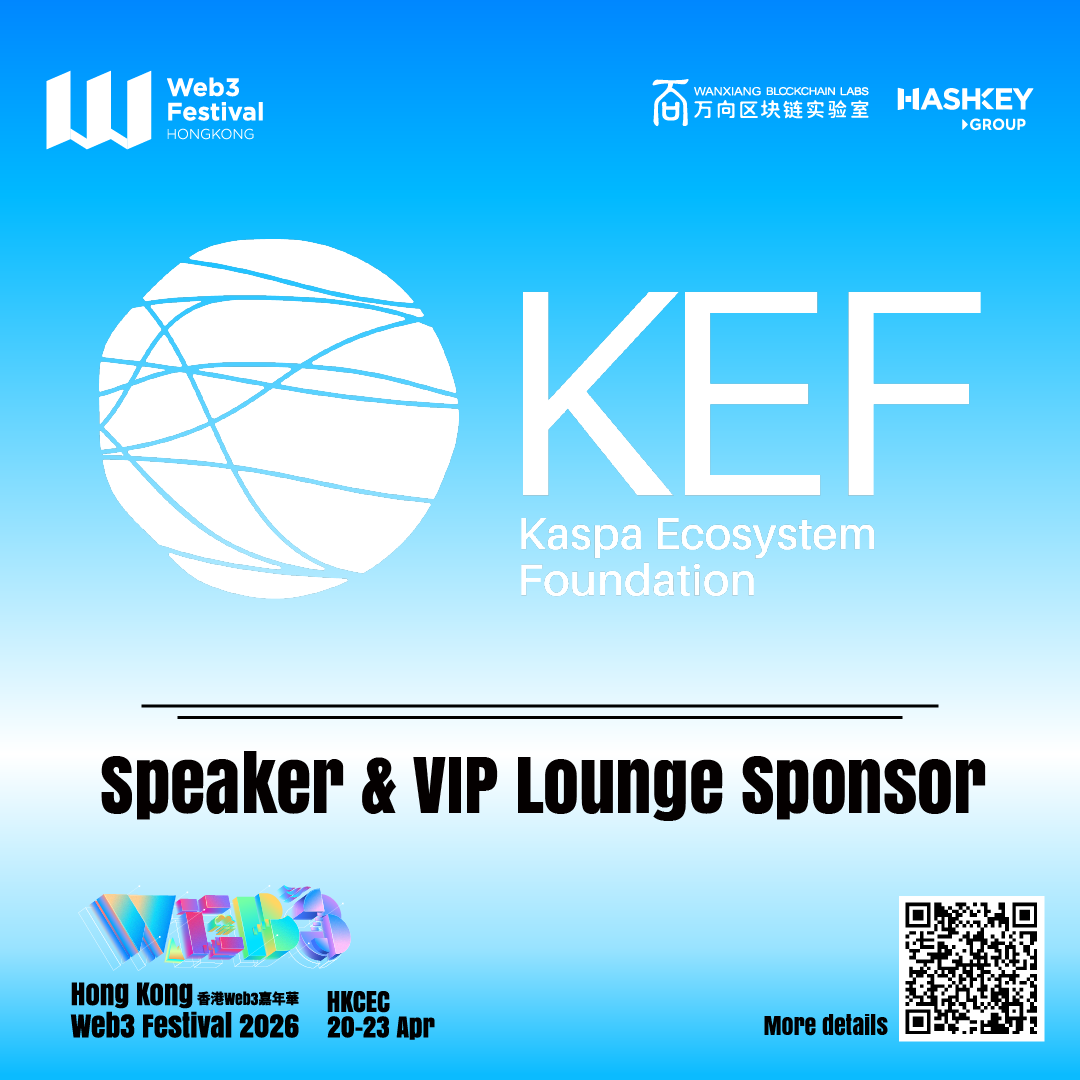
  • Kaspa Ecosystem Foundation Announced as Speaker and VIP Lounge Sponsor at Hong Kong Web3 Festival 2026

    Hong Kong, 10th April 2026, ZEX PR WIRE — Hong Kong Web3 Festival 2026 is honored to have Kaspa Ecosystem Foundation onboard as Speaker & VIP Lounge Sponsor.

    Kaspa Ecosystem Foundation is dedicated to fostering the development, adoption, and sustainability for the Kaspa ecosystem. Kaspa utilizes the GHOSTDAG protocol, a generalization of Nakamoto Consensus, and is the fastest Proof-of-Work network that will soon enable native programmability. Read more at: https://kaspafoundation.org

    Hong Kong Web3 Festival (“Web3 Festival”), co-hosted by Wanxiang Blockchain Labs and HashKey Group, is Asia’s premiere crypto conference since 2023. The previous editions brought together over 350 exhibitors and more than 1,200 speakers for in-depth discussions, attracted a cumulative total of 100,000 visitors, and saw over 400 diverse side events. It has solidified its status as a leading crypto event, influencing Hong Kong’s Web3 landscape.

    Following the sellout success of its previous editions, Hong Kong Web3 Festival has announced its return on 20–23 April at HKCEC. Now in its 4th year, this four-day event will once again bring tens of thousands of Web3 professionals, investors, and enthusiasts across the globe to connect, learn and be inspired.

    Web3 Festival 2026 has set the agenda for Web3 growth and innovation, focusing mainly on traditional finance and crypto finance, AI + Web3, and RWAs.

    The conference will also convene top experts and leading Web3 projects to exchange ideas, share best practices and gain perspectives on today’s evolving Web3 landscape.

    Join Hong Kong Web3 Festival on April 20–23 and be part of an epic Web3 journey: https://luma.com/hkweb3festival_2026

  • Joshua Chefec Advocates for Financial Literacy and Resilient Leadership

    New York, USA, 9th April 2026, ZEX PR WIRE — Joshua Chefec, previously a Market Executive at J.P. Morgan, is speaking out on the importance of financial literacy and resilient leadership as essential tools for long-term economic mobility and personal success.

    Drawing from his experience in commercial banking and mentorship, Chefec is encouraging individuals, especially young professionals and students, to take a more active role in understanding financial systems and building personal discipline.

    “Success can only be defined by yourself,” Chefec says. “It’s about being content with the sum of the parts of your life—family, friends, career, and personal interests. Financial knowledge is a big part of that balance.”

    The Growing Need for Financial Literacy

    Financial literacy remains a major gap across the United States. According to the National Financial Educators Council, the average American loses over $1,800 per year due to a lack of personal finance knowledge. At the same time, studies from the FINRA Investor Education Foundation show that only about one-third of adults can correctly answer basic financial literacy questions.

    For younger generations, the gap is even more pronounced. A 2023 report from the TIAA Institute found that Gen Z adults scored the lowest among all age groups on financial literacy assessments.

    Chefec has seen the impact of this gap firsthand through his volunteer work with W!SE, an organization focused on preparing students for college and careers through financial education.

    “Financial literacy is one of the most practical tools we can give people,” he says. “It creates options. It builds confidence. And it helps people make better decisions over time.”

    Leadership Starts with Integrity and Judgment

    In addition to financial education, Chefec is also emphasizing the importance of leadership grounded in integrity and clear thinking.

    “My industry is about doing right by people,” he says. “It’s about building trusting relationships and following through your words with action.”

    His career, which includes leadership roles at JPMorgan Chase, has been shaped by managing complex financial decisions and leading large teams. He believes that strong leadership is not just about results, but about how those results are achieved.

    “It’s about sound judgment, problem solving, and communication,” he explains. “You have to be able to think clearly through complex situations.”

    According to a Deloitte survey, 82 percent of employees say they are more likely to stay at a company where leadership demonstrates strong ethical behavior. At the same time, organizations with high-trust leadership report up to 50 percent higher productivity.

    Resilience as a Long-Term Advantage

    Chefec also points to resilience as a key factor in both career and personal growth. His own path included early challenges that required him to adapt and stay focused.

    “I was forced to grow up much faster than others,” he says. “I overcame those things by being resilient and focused and going after what I want.”

    He believes resilience is not just about reacting to setbacks, but about maintaining a mindset that supports long-term progress.

    “I focus on mental toughness and not allowing myself to be self-defeating,” he says. “I think about what advice I would give to others in my situation, and I tell that to myself.”

    Research supports this perspective. A study published in the Harvard Business Review found that resilient individuals are more likely to achieve career advancement and report higher overall well-being.

    What Individuals Can Do Today

    Chefec encourages people to take small, consistent steps to build both financial knowledge and personal resilience.

    “I try not to over-engineer my career or my life,” he says. “Start simple. Stay consistent.”

    He suggests focusing on three key areas:

    • Learn from multiple sources, including books, news, and conversations

    • Seek out diverse perspectives to improve decision-making

    • Build habits that support discipline and long-term thinking

    “When I build a team, I want diversity of thought,” he adds. “You should approach your own growth the same way.”

    A Broader View of Success

    At the core of Chefec’s message is a broader definition of success—one that goes beyond career achievements.

    “If you’re only successful in one area of life, you won’t find happiness or satisfaction,” he says. “Overall well-being comes from integrating all parts of your life.”

    As financial systems grow more complex and career paths become less linear, his perspective reflects a shift toward more balanced and self-directed definitions of success.

    Call to Action

    Individuals are encouraged to take ownership of their financial education and personal development. This can include seeking out credible learning resources, engaging in conversations about money and decision-making, and building habits that support long-term growth.

    Small, consistent actions can create meaningful change over time.

    To read the full interview, visit the website here.

    About Joshua Chefec

    Joshua Chefec is a New York, NY-based finance professional. A CFA Charterholder, he has held senior roles at JPMorgan Chase, where he served as Executive Director and Market Executive, leading large commercial banking teams and managing complex client relationships. He is actively involved in mentorship and financial literacy initiatives, including volunteer work with W!SE. 

  • Energy Vault Enters Japanese Market with Acquisition of 850 MW Energy Storage Portfolio, Set to Capture One of the World’s Fastest-Growing Energy Storage Markets

    Strategic acquisition establishes an immediate, localized footprint in Japan, advancing Energy Vault’s global own & operate strategy in a high-growth, underpenetrated market

    Transaction includes onboarding of a proven local Japanese development team and 350 MW of advanced-stage projects targeted to reach Notice to Proceed (NTP) in H2 2027, with Commercial Operation Dates (COD) expected in mid-2028

    Acquisition brings total MWs for Energy Vault’s owned assets acquired, under construction and in operation to over 1 GW across all asset classes and geographies, expected to yield over $180M+ in annual recurring EBITDA run rate ahead of previous guidance

    Westlake Village, CA, 9th April 2026, ZEX PR WIRE — Energy Vault Holdings, Inc. (NYSE: NRGV) (“Energy Vault” or the “Company”), a global leader in sustainable, grid-scale energy storage and AI compute infrastructure solutions, today announced its formal entry into the Japanese market through a binding agreement to acquire a pipeline of BESS projects from a leading domestic energy storage developer. The transaction includes the integration of an established team of local energy experts and the acquisition of a high-quality, 850 MW Battery Energy Storage System (BESS) development portfolio, positioning Energy Vault to capitalize on one of the fastest growing and structurally-advantaged energy storage markets among developed economies.

    The acquired portfolio consists of 350 MW of advanced-stage BESS projects targeted to commence construction in H2 2027 and reach commercial operations beginning in H2 2028. The portfolio also includes 500 MW of early-stage BESS projects, providing a robust, multi-year growth pipeline that positions Energy Vault for long-term leadership in the Japanese energy storage market.

    This acquisition establishes Energy Vault’s immediate presence in Japan, directly capitalizing on a uniquely attractive market driven by increasing grid constraints, rapid renewable penetration, and a projected 50%+ CAGR in BESS capacity. A critical component of this entry strategy is the onboarding of the local development team into Energy Vault, securing invaluable on-the-ground expertise in Japanese land rights, complex permitting, and utility interconnections. By combining this local development savvy and execution capability with our global integration, supply chain and asset ownership expertise, Energy Vault is uniquely positioned to support Japan’s 2050 carbon-neutral goals while delivering diversified returns across the country’s highly attractive wholesale arbitrage, capacity, and balancing markets.

    “Entering the Japanese market is a key component of our high growth markets expansion strategy and represents one of the most compelling energy storage growth opportunities globally,” said Robert Piconi, Chairman and Chief Executive Officer of Energy Vault. “This acquisition provides us with a foundational leadership position in Japan with advanced stage, attractive storage IPP projects coupled with critical local execution capabilities necessary to deliver at the highest performance levels within the Japanese BESS market. By combining our proprietary VaultOS™ energy management software and global supply chain with a proven local team, we are uniquely positioned to accelerate the deployment of the flexible capacity that the Japanese grid urgently requires. Furthermore, we expect to leverage our new solutions in the high-growth AI Compute segments to further compound growth opportunities within the market to enhance delivery of predictable, high-margin, long-term revenue streams ahead of our previously stated growth targets.”

    The Japanese energy market is undergoing a fundamental structural shift toward “revenue stacking,” where BESS assets are increasingly required to generate diversified yields from wholesale arbitrage, capacity markets, and critical balancing services to ensure system stability. To meet these specific market dynamics, which demand exceptionally high energy density and stringent safety profiles, Energy Vault intends to leverage its technology-agnostic approach. This includes deploying its B-VAULT™ AC Technology Platform and integrating alternative chemistries, building upon the Company’s recently announced partnership with Peak Energy to commercialize next-generation sodium-ion battery technology.

    “Despite being a highly developed economy, Japan’s energy storage market remains significantly underpenetrated and is now entering a period of accelerated growth driven by renewable expansion and structural grid constraints. Importantly, storage demand in Japan is not tied to load growth, but to the increasing need for flexibility, resilience, and system stability—creating a powerful, long-duration growth tailwind for our broad portfolio of solutions,” added Piconi.

    Energy Vault’s platform creates a fully integrated value chain spanning the complete infrastructure lifecycle, from initial development through long-term operations, enabling the Company to generate stable, recurring cash flows from owned assets. By self-performing critical functions including engineering, procurement, construction, and ongoing service agreements, Energy Vault produces diversified revenue streams while maintaining strategic flexibility to deploy capital where it delivers optimal returns.

    Energy Vault’s active global portfolio of owned assets now encompasses over 1 GW of critical energy and AI digital compute infrastructure in operation or under construction, including newly announced expansions in “powered land” and “powered shell” modular data centers in the US market. These assets announced to date are expected to yield over $180M+ in annual, recurring EBITDA streams once fully constructed and operational in the next 12-36 months, well ahead of our previously stated guidance.

    About Energy Vault
    Energy Vault® develops, deploys and operates utility-scale energy storage solutions designed to transform the world’s approach to sustainable energy storage. The Company’s comprehensive offerings include proprietary battery, gravity and green hydrogen energy storage technologies supporting a variety of customer use cases delivering safe and reliable energy system dispatching and optimization. Each storage solution is supported by the Company’s technology-agnostic energy management system software and integration platform. Unique to the industry, Energy Vault’s innovative technology portfolio delivers customized short, long and multi-day/ultra-long duration energy storage solutions to help utilities, independent power producers, and large industrial energy users significantly reduce levelized energy costs while maintaining power reliability. Since 2024, Energy Vault has executed an “Own & Operate” asset management strategy developed to generate predictable, recurring and high margin tolling revenue streams, positioning the Company for continued growth in the rapidly evolving energy storage asset infrastructure market. Please visit www.energyvault.com for more information.