Blog

  • Manila delivers: Highlights from SiGMA Asia 2026

    Sliema, Malta, Jun 16, 2026, ZEX PR WIRE — Not even the sporadic showers over the last few days could dampen the mood here in Manila. Now in its fourth year, the summit is enjoying the sweet summer fruits of an event that has triumphed through adversity.

    Our beginnings were less than auspicious. The paint was fresh on the walls of our new office, and everything was on track for the inaugural launch of SiGMA Asia in 2020 – set to be our first foray outside of Malta. No one expected a pandemic to turn up. The events industry ground to a halt and our path inevitably had to take a different turn.
    Happily, in 2023 we were back, armed with a new kind of experience, and determined to double down on our efforts to leave no stone unturned in the launch of our first event for the Asian markets. The industry was eager to get back into the swing of things too, with the first show serving as an important bridge between East and West.

    In 2026, the Philippines remains a leader amongst its peers. Strong engagement. Lucrative when it comes to revenue potential. And a clear legal framework that champions regulated gambling. Where better to hold SiGMA than here in Asia’s highest performing jurisdiction?

    We’ve done our calculations and SiGMA Asia 2026 is estimated to have welcomed around 7.8 thousand international delegates over the last few days, with the company expecting this figure to nearly double next year to 12,000.

    There’s a lot to unpack – so let’s get into it. Here are the moments that made it to the SiGMA halls of fame.

    Getting into the swing of things

    Great networking is our speciality. From high-level conversations on the green to easy conversation over a plate of good food, we had your social calendar covered this week. Following an opening party on the 31st of May, we started the month of June with a full blast of activities.

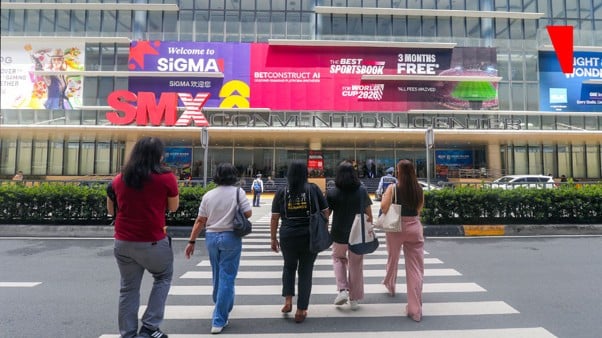
    Most delegates started their day with a stop at the Conrad Hotel to pick up their badge ahead of the conference. Meanwhile, exhibitors toured the expo floor at the SMX Convention Centre to put the finishing touches on their booth.

    For platinum ticket holders looking for high-level networking and a bit of sport, the SiGMA Nexus Elite Golf Tour hit the spot. Held at Club Intramuros, the 18-hole course was a site for sore city eyes. Lush tree-lined greens set amidst historical fortifications make this one of the most beautiful courses in the country. The site of a Rolex on the prize table wasn’t a bad view either. Breakfast and lunch were served, while irresistible champagne stops along the course made for a pleasurable day amongst fellow C-levels.

    Guests in the mood for something a little less competitive headed down to Manila Bay. And what better way to start your week than with a gentle two-hour cruise. A glass of crisp white hit the spot as they headed out to find the sea breeze.

    As is tradition, we closed the curtains on the first day with an elegant awards ceremony at the Conrad Hotel. Beyond celebrating the industry, the event also cheered on the SiGMA Foundation. A charitable art auction raised €17,000 through bids, with companies such as OneHazel, Finera, Malta Media, and Z-Gaming lending their support. The National Lottery of Liberia also came through, bidding on two items – Bel Sison’s Hello Kitten sculpture, and Ian Inoy’s Lucky Knot painting. In a show of thanks, the companies will receive the value of their bids back in media spend with SiGMA.

    Highlights of the night included an award to PAGCOR CEO, Alejandro Tengco, recognising his outstanding contribution to gaming, a fun quiz with a Rolex up for grabs, a raffle, and a special round of honourary awards during Hall of Game.

    SiGMA Poker Tour Manila

    Running alongside the SiGMA Asia event, the SiGMA Poker Tour was in town for its second Asian edition. Its most ambitious tour to date, SPT Manila delivered the goods when it came to excitement – and of course, prize pools.Hosted at City of Dreams in Manila from the 30th to 04 June, players competed for 2026’s largest prize pool – with PHP 20 Million overall guaranteed. The SPT is back in September with its Mexican debut.

    From Keynotes to Closing Night: Highlights from SiGMA Asia 2026 

    The first day of the conference opened with a special welcome ceremony that included a ribbon cutting and several keynotes from prominent figures – including PAGCOR CEO, Alejandro Tengco and Deputy Speaker, the Hon. Maria Rachel Arenas.

    Speaking to the morning crowd, Tengco said that, “The true measure of this industry is not simply its size or rate of expansion, but our ability to ensure that gaming remains properly regulated, socially responsible, and more importantly, genuinely beneficial to the communities we all serve.”

    At a time of uncertainty, gatherings such as the SiGMA Asia Summit are more important than ever, Tengco went on to say.

    “Events like this allow regulators, operators, vendors, and stakeholders to come together, not merely to discuss opportunities, but to address challenges collectively and decisively. PAGCOR has always recognised the importance of the gaming industry as a critical source for government funding and a true partner in nation-building.“

    “We hope that there will be another conference next year and in the many years to come,” he concluded warmly.

    Deputy Speaker Hon. Maria Rachel Arenas, meanwhile, highlighted the transformative power of breakthrough innovations to reshape societies – particularly AI.

    “It is redefining how we work, learn, create, and make decisions, ” she said. The question before us, Arenas emphasised, is no longer whether AI will transform our societies. The question is whether we will shape the transformation wisely.

    Later that day, over 40 ambassadors and consuls based in Manila gathered for a special Malta Day celebration to commemorate Sette Giugnio that was hosted by the Maltese Embassy to the Philippines. Present were key figures, such as H.E Ambassador of Malta to China and the Philippines, John Busuttil, Dr Regina Jacinto Barrientos, Malta Consul for Manila, and Maria Andrelita S. Austria, Department of Foreign Affairs Undersecretary for Economic and Cultural Diplomacy, Traditional food was served, and young musicians from the youth orchestra played a selection of Maltese music.

    Also taking place during SiGMA Asia was the Global Gaming Awards Asia-Pacific 2026. Prior to the announcement of the ten category winners, SiGMA Founder, Eman Pulis shared his thoughts on stage.

    “We’re back, he said, stronger, and leading the pack in bringing the community to Asia, he said”

    “With 8 summits annually, we are the only conference producer covering the whole globe. Our mantra, he went on to say, is to promote the idea that regulated gaming is the only way to go.”

    The event concluded with SiGMA’s legendary closing event. Manila is a city that some say never sleeps. Its streets hum with an after-dark energy that filters a gritty, underground street style into an electric nightlife culture. Neon lights bleed onto the streets, and old school hip hop, smooth jazz and pop mingle with superclub beats. Speakeasy bars, Shanghai-style art deco saloons, cool rooftop clubs – good times really don’t discriminate.

    It’s here – in the heart of the city at BSK Manila – that SiGMA Asia hosted its official party, brought to you by 747.live. Cool city vibes, with references to old-school Pinoy hip-hop culture – all set to the rhythm of DJs John Odin and SEHEN.

    SiGMA Asia returns in June 2027 to the tune of 12,000 delegates. A special offer on tickets is currently available, but not for long. Catch it before it’s over.

  • DSCVR Expands Agent Skills to Advance Its Web3 Intelligence Infrastructure

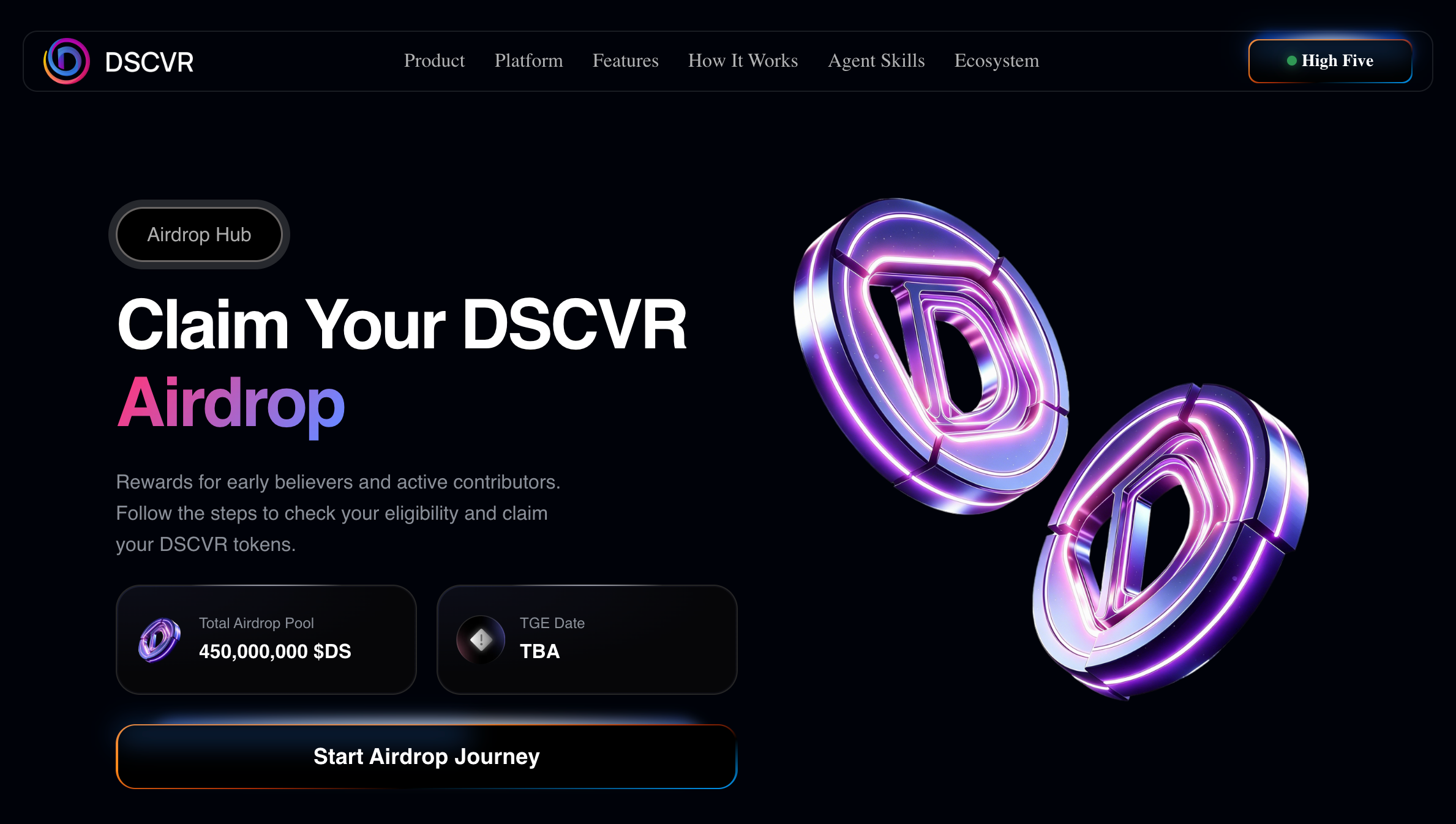
    Los Angeles, CA, Jun 15, 2026, ZEX PR WIRE — The AI agent landscape is evolving beyond chat interfaces and toward infrastructure. As adoption accelerates across trading, research, and on-chain automation, access to information is no longer the primary constraint. The ability to structure, filter, and operationalize information at scale is.

    Recent upgrades to DSCVR’s agent skills platform are designed around that shift, expanding the product beyond standalone AI features into a broader intelligence infrastructure for Web3 users and AI-native systems.    

    From AI Assistants to Operational Intelligence Systems

    One of the most significant developments within DSCVR is the continued evolution of agent skills beyond a traditional prompt-and-response experience.

    Recent upgrades strengthen the platform’s ability to organize information, classify events, filter signals, and process real-time developments across Web3 environments. The focus is increasingly operational: helping users identify relevant developments, evaluate competing narratives, and make faster decisions in rapidly changing markets.

    A recent example is DSCVR agent’s market research skill, which automatically generates both bullish and bearish cases around a given asset or event. Rather than promoting a single narrative, the system evaluates market structure, tokenomics, liquidity conditions, historical precedent, and behavioral signals before producing an objective assessment.

    The capability was recently applied to a week that saw more than $634 million in token unlocks, analyzing unlock mechanics, capital flows, and historical performance patterns to generate probability-based conclusions within a single workflow.

    The upgrades also support growing demand for persistent usage and API-driven applications. As more users and external tools connect to the platform, agent skills is increasingly being optimized for continuous intelligence delivery rather than one-time information retrieval.

    Instead of surfacing fragmented updates and endless feeds, the system prioritizes contextual relevance, structured interpretation, and actionable signal extraction.

    Why Infrastructure Matters 

    As foundation models become increasingly accessible, competitive differentiation is shifting from models toward infrastructure. 

    As foundation models become more accessible, differentiation is moving toward systems that can organize information, maintain context, and support automation at scale. This challenge is particularly acute in Web3, where information is distributed across protocols, applications, governance forums, social channels, and market activity.

    Through real-time signal processing, structured analysis, semantic organization, API accessibility, and continuously expanding agent skills, DSCVR is building an intelligence layer designed to support both human users and autonomous systems operating across increasingly complex information environments.

    A broader shift is underway across Web3: AI is becoming less focused on content generation and increasingly centered on coordination, decision-making, and execution. As agents become more deeply integrated into digital economies, systems capable of transforming fragmented information into actionable intelligence are likely to become a foundational part of the stack.

    As DSCVR continues to expand its intelligence infrastructure, community participation remains an important component of the platform’s long-term growth strategy. Recent ecosystem initiatives, including the Community Rewards program, have helped strengthen engagement across the network while introducing more users to the platform’s evolving AI capabilities.

    While incentive programs can accelerate adoption, the broader objective remains unchanged: building the intelligence infrastructure that enables users, developers, and autonomous agents to navigate increasingly complex Web3 environments more effectively.

    As agent skills continue to expand, DSCVR is positioning itself not simply as an AI application, but as a foundational intelligence layer for the next generation of AI-powered Web3 experiences.

  • Detroit River Guide Jerome Dubrulle Is Running Walleye Charters Full Throttle This Season

    DETROIT, MI, Jun 11, 2026, ZEX PR WIRE — If you’ve spent any time around walleye country, you already know the Detroit River has a reputation. Not the kind that needs hype behind it, either. The currents, the seasonal runs, the sheer volume of fish that move through this stretch of water, it’s legitimately one of the best freshwater fisheries in the Midwest. And right now, smack in the middle of prime season, USCG Licensed Captain Jerome Dubrulle is out there making the most of it.

    Jerome Dubrulle is the founder of Jacques on the D Fishing Charter, running guided trips out of Stanton Yards Marina on Detroit’s east riverfront. He’s been fishing these waters long enough to know them in a way that’s hard to teach and impossible to fake. Spring walleye season runs April through June. Fall picks back up in October and November. Both windows consistently produce, and Jerome builds his entire trip calendar around those windows on purpose.

    What Makes Walleye Season on the Detroit River Different

    River fishing rewards people who pay attention. The current moves baitfish through the same corridors every season, and predators set up in the same places as a result. Once you learn those patterns, you can fish them predictably. Jerome has learned them. Spring run, fall bite, mid-season transitions, he’s dialed into all of it, and he adjusts his techniques to match—whether that’s jigging, bottom bouncing, or something else entirely, depending on the day. That local knowledge is what separates a good trip from one where you just kind of hope something bites.

    Walleye trips are priced at $400 for up to three people and $500 for a group of four. Start times are 6AM and 2PM. Fish cleaning is included, all equipment is provided, and you don’t need to bring anything except yourself and an appetite for a good day out.

    A Charter Built Around You, Not Just the Species 

    One thing that stands out about Jerome’s operation is how straightforward it is. No gimmicks. He runs a clean, well-equipped 2019 Yamaha FSH 210 Center Console, takes groups of up to four, and handles everything from the game plan to the gear. First-timer who’s never held a rod? Fine. Serious angler who wants to get after it from the moment lines are in? Also fine.

    His catch-and-cook experience has become something of a signature offering. You spend a morning on the river, you come in with fish, and Jerome turns it into a proper shore-side meal. That’s not a common offering, and clients who’ve done it tend to talk about it more than the fishing itself, which is really saying something.

    More Than a Captain

    Outside of running charters, Jerome is also a competitive endurance athlete and ultra-runner who has raced major marathons and long-distance events, which speaks to his threshold for early mornings and uncomfortable conditions. He’s also a deer hunter, avid hiker, and someone who has spent serious time outdoors across all four seasons.

    Outside of the boat, he works as a real estate professional, where he continues to put his local knowledge to use—helping buyers and sellers navigate real estate transactions.

    Walleye, Perch, Multi-Species, and a Full Season Ahead

    Beyond the walleye trips, Jacques on the D runs yellow perch charters on Lake St. Clair from September through November, a genuinely underrated fishery that tends to surprise first-timers. July and August shift into multi-species mode, targeting smallmouth bass, perch, and whatever else is biting, which is a solid option for mixed groups or families where not everybody has a specific fish in mind.

    The whole operation runs out of Stanton Yards Marina at 9666 E Jefferson Ave in Detroit.

    Book a Trip

    Anyone looking to get on the water with Jerome can reach him directly at 248-701-3526 or by email at jacquesonthed@gmail.com. More information about trips, pricing, and available dates is at DubrulleFishingCharter.com.


  • AI STUDIOS Launches AI Course Builder: Turn Any Topic Into a Full Course

    The new AI Course Builder feature inside AI STUDIOS auto-generates complete e-learning curricula — sections, lessons, and quizzes — from a single prompt, with native AI avatar video production and one-click SCORM export.

    PALO ALTO, Calif, June 10th, 2026, AI STUDIOS on Monday launched AI Course Builder, a new AI-powered feature that generates  a complete, structured e-learning curriculum from a single topic input — compressing a process that once took instructional design teams weeks into a matter of seconds.

    AI STUDIOS is DeepBrain AI’s flagship B2B SaaS platform for AI-powered video creation. Built for enterprise scale, it enables organizations to produce hyper-realistic AI avatar videos, localize content across 150+ languages, and deploy training and communications materials without cameras, studios, or production staff. Used by companies worldwide for corporate training, marketing, and internal communications, AI STUDIOS serves as the production backbone behind AI Course Builder’s video integration.

    The tool targets a persistent gap in the corporate training market. Demand for scalable e-learning content has grown sharply across HR teams, training companies, and independent instructors, but existing solutions have forced organizations to choose between full-featured LMS platforms that require specialist expertise and simpler video tools that lack any curriculum design capability.

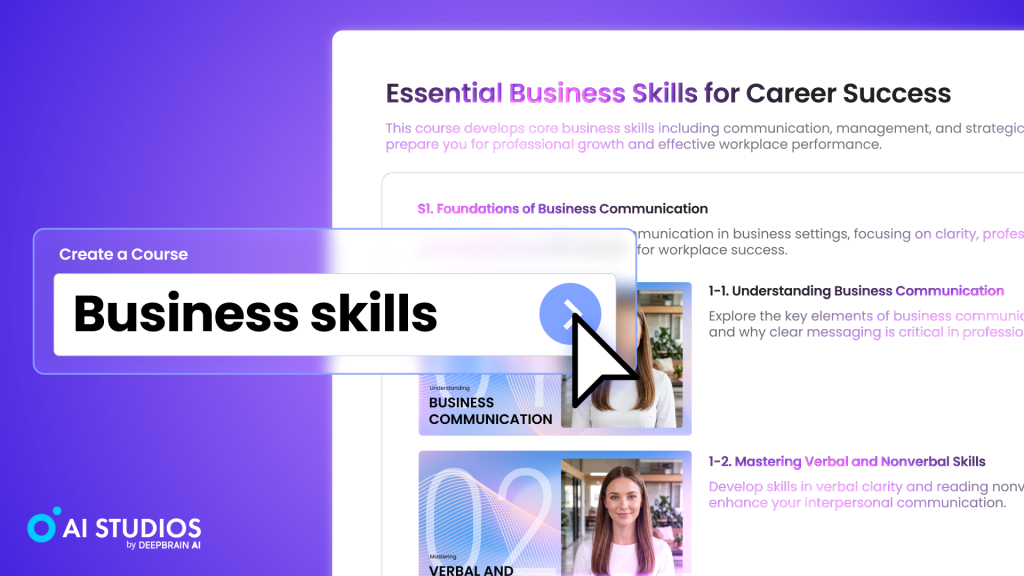
    AI Course Builder addresses both constraints at once. Users enter a topic — “New Employee Onboarding,” “Data Privacy Compliance,” “Sales Fundamentals” — and the platform returns a fully structured course: sections, lessons, and quizzes, sequenced for learning progression. Every element is then editable via drag and drop, with no instructional design background required.

    Each lesson connects directly to AI STUDIOS’ video production layer. Instructors can attach existing AI avatar videos or generate new ones without leaving the platform, drawing on more than 1,000 AI voices across 150 languages. The integration is designed to eliminate the need for cameras, studios, or production staff — a particular advantage for global organizations building multilingual training libraries.

    The platform goes beyond passive video delivery. Quizzes and role-play-based scenario lessons are built in natively, giving learners interactive touchpoints throughout the course. Role-play scenarios are particularly suited to customer service, sales, and compliance training, where applying knowledge in realistic contexts improves retention. DeepBrain AI said it plans to extend the feature with interactive avatar integration in future releases.

    Finished courses export as SCORM — the universal e-learning interoperability standard — enabling one-click deployment to Moodle, Blackboard, Canvas, or any compatible LMS. A built-in Play Course preview lets creators review the learner experience before publishing, with learners able to track their progress and complete lessons in sequence.

    The announcement adds competitive pressure to established course authoring platforms including Articulate 360, iSpring, and Adobe Captivate, which are widely used in enterprise training but require dedicated specialists and extended production timelines. AI Course Builder positions AI STUDIOS as an end-to-end alternative — one where AI drafts the curriculum architecture and the course creator refines it.

    “AI Course Builder enables the full online course workflow — curriculum design, video production, learner engagement, and deployment — in a single platform,” said Eric Jang, CEO of DeepBrain AI. “Our goal is to make professional-quality e-learning accessible to anyone, regardless of technical background, and to help enterprises accelerate their shift to digital training.”

    AI Course Builder is available now inside AI STUDIOS. The feature is free to use at aistudios.com.


    About DeepBrain AI

    DeepBrain AI is a global leader in AI Avatar, AI Agent, and AI Human technology. Its flagship B2B SaaS platform, AI STUDIOS, helps enterprises create hyper-realistic AI avatars, real-time avatar agents, and localized video content at scale. Based in Palo Alto, Calif., DeepBrain AI serves enterprise customers worldwide.


    Media Contact:
    DeepBrain AI Communications 
    global@deepbrain.io
    www.aistudios.com

  • Beyond the Interface: How Bercor is Architecting the Era of Financial Orchestration

    For all the capital poured into financial technology over the past decade, a fundamental structural deficit sits beneath the modern digital economy: the underlying rails of global finance still operate on mid-twentieth-century pipelines. While a modern enterprise can scale computing power via the cloud in milliseconds, the infrastructure moving global capital remains delayed, fragmented, and operationally rigid. Global trade has entered an “instant era,” yet clearing still relies on legacy correspondent banking and disconnected liquidity pools. Finance successfully digitized its front-end, but failed to modernize its operational core.

    To break this bottleneck, a sophisticated new market category is emerging:

    Financial Orchestration Platforms

    Sitting at the forefront of this paradigm shift are platforms like Bercor. Rather than offering another standalone gateway or a localized wallet, the multi-entity financial infrastructure firm is quietly engineering an integrated architecture designed to function as a comprehensive financial operating system for international commerce.
    By introducing orchestration early, platforms like Bercor solve a compounding crisis for globally active enterprises. Currently, international firms face quiet but severe drains on growth. Capital accumulates as trapped liquidity inside regional silos, foreign exchange inefficiencies chip away at margins, and corporate finance teams are forced to manually reconcile data across disconnected invoicing, compliance, and accounting tools.

    This friction is the byproduct of the first wave of fintech, which focused entirely on single-point solutions—cleaner dashboards, faster onboarding, and embedded payment gateways. While this successfully hid complexity from the end-user, it left the fragmented operational plumbing underneath completely intact. An international business today often patches together separate vendors for cross-border gateways, localized acquiring, and regional fraud detection, forcing corporate treasury teams to act as manual system integrators.

    Bercor redefines this landscape by treating global finance as a single, programmable ecosystem. Its underlying architecture unifies three historically isolated pillars into a singular environment:

    • Intelligent Payment Infrastructure: Consolidating cross-border payments, online gateways, and merchant acquiring networks to move capital seamlessly between traditional fiat and compliant digital asset networks.
    • AI-Driven Predictive Operations: Embedding operational AI directly into the infrastructure layer to handle transaction routing, real-time liquidity forecasting, and automated ledger reconciliation.
    • Embedded Regulatory Architecture: Integrating proactive compliance and automated anti-money laundering (AML) checks directly into the flow of capital, turning risk management into an invisible design feature.

    When payments, treasury, compliance, and liquidity routing share a single logical backend, capital becomes truly programmable. Instead of holding massive, idle capital pools in various international subsidiaries to cover localized regional expenditures, an orchestrated infrastructure allows enterprises to dynamically route and convert capital based on real-time transaction demand.

    Widespread financial modernization still faces deep structural headwinds, driven by evolving cross-border regulations, technical replacement complexities, and entrenched institutional inertia within traditional Tier-1 banking structures. Yet, the macroeconomic trajectory is clear. As global commerce continues to operate via continuous software, financial infrastructure must follow the same architecture. The next competitive advantage belongs to the platforms capable of orchestrating capital most intelligently.

    About Bercor

    Bercor Technology Limited provides core fintech infrastructure for B2B and B2C markets, focusing on enterprise payments, cross-border solutions, and multi-currency digital capabilities. Bercor is registered in Hong Kong (Company Registration No. 80270732) and operates as a registered Money Services Business (MSB Registration Number: 31000330481412). For more information, visit bercor.com.

  • Carziqo Reveals the Core Revenue Scenarios Behind Its Autonomous Mobility Ecosystem

    Philippines, Jun 05, 2026, ZEXPRWIRE — As autonomous driving, artificial intelligence, and intelligent fleet management continue to reshape the global transportation industry, Carziqo is positioning itself as more than a car rental platform. The company is building a multi-scenario autonomous mobility ecosystem designed to generate revenue through ride-hailing, vehicle rental, logistics delivery, enterprise mobility, and smart fleet operations.

    Unlike traditional car rental companies that mainly depend on short-term vehicle usage fees, Carziqo’s business model is built around the idea that autonomous vehicles can become productive operating assets. Through digital dispatching, intelligent route planning, order allocation, and fleet management, each vehicle can potentially serve multiple commercial scenarios and create recurring value.

    Autonomous Ride-Hailing: A Key Revenue Driver

    One of Carziqo’s most important revenue scenarios is autonomous ride-hailing. Through the platform, autonomous vehicles can be deployed to serve passenger transportation needs in urban areas, offering point-to-point mobility services.

    Compared with traditional ride-hailing models that rely heavily on human drivers, autonomous ride-hailing may reduce labor dependency, extend vehicle operating hours, and improve dispatching efficiency. In the future mobility market, competition may no longer be defined only by the number of drivers on a platform, but by the platform’s ability to manage intelligent vehicle fleets efficiently.

    For Carziqo, each autonomous vehicle can be viewed as a mobile revenue-generating asset. Once deployed in a stable and compliant operating environment, the vehicle may continuously generate income through passenger orders.

    Smart Vehicle Rental: Turning Cars into Operating Assets

    Another core revenue source for Carziqo comes from vehicle rental. The platform allows users to rent autonomous vehicles for approved commercial or mobility-related purposes. Enterprise users may also rent vehicles for staff transportation, business travel, client pickup, regional operations, or customized mobility services.

    This model changes the role of vehicles from simple transportation tools into operating assets. Instead of remaining idle, vehicles can be rented, managed, and deployed through the platform. Rental fees, platform service fees, maintenance support, and fleet management services may all become part of Carziqo’s long-term revenue structure.

    Urban Logistics Delivery: A New Growth Opportunity

    Beyond passenger transportation, Carziqo also sees urban logistics delivery as a major growth scenario. With the expansion of e-commerce, instant retail, local delivery, and business supply chains, the demand for efficient, cost-effective, and reliable delivery vehicles continues to grow.

    Autonomous vehicles can potentially be used for parcel delivery, grocery distribution, business document transport, merchant restocking, and other urban delivery services. During non-peak passenger hours, the same vehicle may be reassigned to logistics tasks, improving daily utilization and increasing overall revenue potential.

    This multi-scenario usage model is one of the major advantages of intelligent fleets. A vehicle does not have to depend on only one source of income. It can move between ride-hailing, delivery, rental, and enterprise service depending on demand.

    Enterprise and Institutional Mobility: Stable Orders, Long-Term Value

    Carziqo’s revenue opportunities may also come from enterprise and institutional mobility services. Companies, hotels, airports, business parks, commercial centers, and public service organizations often require stable, safe, and manageable transportation solutions.

    Through customized routes, corporate shuttle services, hotel guest pickup, airport transfer services, and business mobility programs, Carziqo can serve clients with recurring transportation needs. These scenarios may offer more predictable demand compared with individual passenger orders.

    For the platform, enterprise mobility can help improve route planning, reduce empty mileage, and create long-term commercial relationships. Stable corporate and institutional demand may become an important pillar of Carziqo’s future revenue model.

    Smart Operations Cloud: The Revenue Engine Behind the Vehicles

    Carziqo’s revenue potential is not limited to the vehicles themselves. The company’s smart operations cloud platform plays a central role in improving fleet efficiency.

    Through intelligent order allocation, real-time vehicle monitoring, route optimization, energy management, maintenance alerts, and operating data analysis, the platform is designed to help each vehicle work more efficiently.

    In the future autonomous mobility industry, profitability may depend not only on vehicle ownership, but also on operational intelligence. The key question is whether a platform can place the right vehicle in the right location at the right time to serve the right order. Carziqo’s smart operations platform is designed around this goal.

    A Diversified Revenue Structure

    Overall, Carziqo’s core revenue scenarios include autonomous ride-hailing, vehicle rental, urban logistics delivery, enterprise mobility, fleet operation services, and platform technology services. This diversified structure may help the company reduce dependence on a single market and create more flexible growth opportunities across different cities, users, and business environments.

    Industry observers believe that the commercial success of autonomous driving will not depend on technology alone. A sustainable business model is equally important. If autonomous vehicles can serve multiple scenarios throughout the day, they may unlock higher operational value than traditional fleets.

    From Car Rental Platform to Autonomous Mobility Ecosystem

    Carziqo aims to move beyond the traditional concept of car rental. The company is working to build an autonomous mobility ecosystem supported by intelligent vehicles, cloud-based dispatching, and multi-scenario operations.

    As the global transportation industry continues to evolve, Carziqo’s model reflects a larger trend: the value center of the automotive industry is shifting from vehicle sales to vehicle operation and mobility services. In this new era, the companies that can manage vehicles most efficiently may play a more important role in the future of transportation.

    About Carziqo
    Carziqo is an autonomous mobility and smart vehicle operations platform focused on autonomous vehicle rental, intelligent fleet management, ride-hailing services, and urban logistics solutions. The company aims to provide future-ready mobility services for individual users, enterprise clients, and commercial partners.

  • Qtum Introduces Integrated AI Infrastructure Suite Featuring Text-to-Video Generation and Unified Model Routing

    A long‑running Bitcoin‑based smart contract platform evolves into a modern AI and compute ecosystem

    Singapore, June 4th, 2026, Qtum Foundation- Qtum today announced the expansion of its ecosystem with Qtum.ai, a text‑to‑video generation platform, and the upcoming Qtum AI Router, a unified inference layer designed to provide efficient access to multiple AI models. Together, these services position Qtum as a blockchain‑supported AI infrastructure network built on a stable, long‑running Proof‑of‑Stake blockchain that has operated continuously since 2017.

    Qtum’s approach combines its Bitcoin‑based UTXO architecture, EVM‑compatible smart contracts, and a reliable, production‑ready blockchain with modern AI tooling, GPU compute, and creator‑focused workflows. The result is an ecosystem that spans blockchain infrastructure, decentralized compute, and AI generation tools under a single brand.

    Qtum.ai: Text‑to‑Video for Creators and Developers

    Qtum.ai provides cinematic text‑to‑video generation using models such as Seedance 1.0, 1.5, and 2.0 and HappyHorse. The platform is designed for creators, developers, and businesses seeking high‑quality AI video without subscription barriers.

    Key characteristics include:

      • No credit card required
      • No recurring subscription
      • No token packs or prepaid bundles
      • Pay‑as‑you‑go usage
      • No data harvesting or model training on user content
      • No cookies, tracking pixels, or ad‑retargeting
      • Authentication via MetaMask Snap or Google login
      • 500 Free tokens

    This model removes common friction points in AI services, including subscription lock‑in, credit‑card anxiety, and persistent marketing emails. Users can generate videos without entering financial information or committing to monthly plans. 

    Qtum AI Router: A Unified Inference Layer

    Beta Launching will be the Qtum AI Router to provide a unified API for routing requests across multiple AI models. Similar in concept to OpenRouter, the service will support:

    • AI model routing
    • Multi‑model inference
    • Distributed GPU compute
    • Low‑latency request handling
    • AI orchestration and workflow integration
    • Agent‑compatible infrastructure

    The Router is designed to support developers building AI agents, automation tools, and multi‑model applications. ClawBot users will find this simple to work with.  

    A Blockchain With Long‑Term Reliability

    Qtum’s blockchain has operated since 2017 with no downtime, offering a stability profile uncommon in the industry. The network combines:

      • Bitcoin‑based UTXO security
      • EVM‑compatible smart contracts
      • Proof‑of‑Stake consensus
      • Enterprise‑grade reliability
      • Consistent uptime across seven years of operation
      • 50 Core updates over 8 years

    This reliability is central to Qtum’s positioning as an AI compute network. AI services require predictable, uninterrupted operation — a requirement Qtum’s blockchain has demonstrated over years of production use.

    A Unified Ecosystem: Blockchain + AI + Compute

    The Qtum ecosystem now spans:

    • Qtum blockchain — a long‑running, stable, Bitcoin‑based smart contract platform
    • Qtum.ai — AI video generation for creators and businesses
    • Qtum AI Router — unified inference routing for multi‑model AI
    • Qtum Ally — a desktop AI agent integrating multiple LLMs
    • GPU infrastructure — powering inference and generation workloads

    This positions Qtum as a hybrid blockchain and AI infrastructure network, supporting decentralized compute, creator tools, and useful Web3 applications.

    About Qtum

    Qtum is a Proof‑of‑Stake blockchain that combines Bitcoin’s UTXO model with Ethereum‑compatible smart contracts. Launched in 2017, Qtum has maintained uninterrupted network operation for over seven years. Today, Qtum is expanding into AI infrastructure, GPU compute, and creator‑focused tooling through Qtum.ai and the Qtum AI Router.

    Website: https://qtum.ai 

  • Europe’s €180 million move: sovereign cloud rebuild starts now

    Europe’s cloud architecture is being reshaped from the ground up, but key questions remain on where data lives and who controls the infrastructure

    GITEX AI EUROPE convenes global enterprises shaping Europe’s cloud & AI future – with IONOS and Trend Micro unveiling market-ready solutions delivering the mandate

    Berlin, Germany, 2nd June 2026, ZEX PR WIRE — When the European Commission projected that 91% of enterprise workloads would migrate to cloud by 2028,[1] it signalled a continent ready to move at scale. The more interesting question, the one drawing together cloud architects, cybersecurity leaders, and enterprise buyers at GITEX AI EUROPE in Berlin this year – is not whether enterprises should migrate, but how to build autonomy, and on what terms.

    GITEX AI EUROPE takes place from 30 June – 1 July 2026 at Messe Berlin, bringing more than 800 enterprises and startups, 500 investors, and 120 speakers from over 100 countries, marking one of the most concentrated international tech participations seen in Berlin.

    Organised by inD, global organisers of GITEX – the world’s largest tech and AI show, and supported by the Berlin Senate Department for Economics, Energy and Public Enterprises, and Berlin Partner for Business and Technology, the event arrives at a defining moment for Europe’s digital infrastructure ambitions, with sovereignty at the center of the business and policy conversations.

    Ownership, not geography

    The common misconception is that storing data in a European server means it is protected under European law. According to Dr. Andreas Nauerz, Chief Product Officer at IONOS – one of Europe’s largest cloud and hosting providers – sovereignty is determined not just by the physical location of a data centre, but by who owns the provider, and where the company is headquartered.

    Global providers may operate infrastructure inside Europe, but can still be subject to their headquarters’ legislation, creating a tension with GDPR that no contractual arrangement can resolve. “Sovereignty goes beyond GDPR conformity: it requires technological control over the cloud stack, open standards, and genuine interoperability,” Dr. Nauerz pointed out.

    The argument lands hardest in regulated sectors, like financial services under the Digital Operational Resilience Act (DORA), and healthcare and critical infrastructure subject to NIS-2 (Network and Information Security) Directive, where enterprises are handling sensitive intellectual properties (IP) or state-adjacent workloads.

    IONOS will use GITEX AI EUROPE to demonstrate what sovereignty looks like in practice: cloud infrastructure and AI solutions built on genuinely European foundations, designed to give businesses real scalability, security, and full data control.

    When cloud meets AI

    The sovereignty question sharpens considerably when AI enters the picture. The concern has moved beyond where data is stored to where models are trained and, critically, where inference runs.

    Dr. Nauerz puts the timing plainly: “If AI inference consolidates on non-European infrastructure before sovereign compute scales, enterprise AI strategies become jurisdictionally compromised – regardless of where the data lives. That window is closing faster than most cloud roadmaps acknowledge.”

    The enterprises that build sovereign infrastructure into their AI strategy from the outset – rather than retrofitting it later – are best positioned as AI becomes central to their operations. This sequencing comes to the forefront of the commercial showcases at GITEX AI EUROPE 2026.

    Complexity is the new attack surface

    Richard Werner, Cybersecurity Platform Lead Europe at TrendAI (a business unit of Trend Micro), offers a complementary lens. From a purely technical threat perspective, Werner argues, the cloud provider’s jurisdiction does not dramatically change the nature of cyber risk. As the sovereignty debate plays out, many enterprises have settled into hybrid cloud arrangements – with workloads spread across multiple providers.

    It is a rational move, yet also where the most common and consequential security gaps could be found. “Hybrid approaches preserve flexibility, but that added complexity often creates the most common gaps: inconsistent identity and access controls, misconfigurations, and fragmented monitoring and response,” shared Mr. Werner.

    At GITEX AI EUROPE, Trend Micro will showcase TrendAI Vision One: an AI cybersecurity platform that unifies cyber risk exposure management, security operations, and layered protection in a single, consolidated solution that adapts to any compliance or regulatory requirement.

    Its flexible deployment across public cloud, sovereign, and air-gapped environments is designed for precisely the mixed architectures that many European enterprises now run.

    Sovereignty moves into infrastructure for GITEX AI EUROPE

    Europe has spent years debating digital sovereignty in policy, whitepapers, and strategies. What is changing now is the commercial urgency. The €180 million sovereign cloud tender awarded in April 2026[2] is the clearest signal of moving sovereign control from a principle to a procurement decision, accelerating the shift faster than before.

    Backed by Germany’s federal government, the European Innovation Council, and Berlin’s own institutional infrastructure, GITEX AI EUROPE arrives as at a pivotal juncture where a significant number of the decisions shaping the continent’s digital self-reliance will be made – with consequences that last for years.

    For more information, please visit www.gitexeurope.com


    Follow GITEX AI EUROPE on social media:

    Facebook  |  Instagram  |  X  |  LinkedIn  |  YouTube

    Hashtag: #GITEXAIEUROPE


    About GITEX AI EUROPE 2026

    GITEX AI EUROPE 2026, Europe’s most comprehensive and cross-industry technology event, returns from 30 June to 1 July 2026 at Messe Berlin, following a successful inaugural edition uniting key global enterprises, SMEs, startups, investors and leaders shaping the global technology agenda. In its second edition in 2026, the event reinforces its role as the defining global platform for Europe’s intelligent economy, uniting the continent’s deep tech, research, and engineering excellence across AI, quantum, data centre, cloud, cybersecurity, circularity tech, among more. With dedicated arenas for Europe’s unicorns, scale-ups, and SMEs, GITEX AI EUROPE continues to accelerate startup growth through North Star Europe, the continental edition of the world’s largest and best-rated startup and investor event.

    The show is organised by inD, global organisers of GITEX, and is endorsed by the Berlin Senate Department for Economics, Energy and Public Enterprises, and supported by Berlin Partner for Business and Technology. For more information, please visit: www.gitexeurope.com


    Media registration is available here
    For Media Registration & Enquiries:
    media@gitexeurope.com
    Media Contact:

    Gareth Wright, AVP PR and Communications inD | 
    gareth.wright@dwtc.com

  • WhiteBeard Closes Round at $26.1 Million Valuation Ahead of Planned Public Market Debut

    Wilmington, DE, 2nd, June 2026, WhiteBeard, the AI powered financial technology company focused on risk management solutions for FX and CFD brokers, has announced the successful completion of its latest financing round at a $26.1 million valuation, marking a significant milestone ahead of the company’s anticipated reverse merger with WhiteBeard Inc. (OTC: WHIB), a publicly traded OTC company.

    The raise comes at a time when the global retail trading industry is undergoing rapid transformation. For more than two decades, many FX and CFD brokers have relied on fundamentally similar risk management practices, despite dramatic changes in technology, market structure, and trader behavior.

    Today, brokers face a new challenge. Artificial intelligence tools have become readily available to retail traders, enabling the creation and deployment of increasingly sophisticated trading strategies. While many of these strategies may ultimately fail, they can remain profitable for extended periods, creating significant exposure for brokers and forcing dealing desks to make increasingly difficult decisions about when and how to manage risk.

    At the same time, brokers continue to operate in an environment where geopolitical uncertainty, market volatility, regulatory scrutiny, and rising operational costs have increased the importance of robust risk management infrastructure.

    WhiteBeard believes the next generation of brokers will need to embrace AI driven decision making to remain competitive.

    “The industry is approaching a point where traditional methods alone are no longer enough,” said co-founder and CEO Shamik Raja. “Brokers are increasingly competing against traders who have access to powerful AI tools and sophisticated automation. We believe the future belongs to firms that use AI to enhance their risk management capabilities and make better decisions in real time.”

    Co-founder Yadav Jani added, “We are excited to bring a company like WhiteBeard to the public markets. Historically, opportunities in financial infrastructure and institutional trading technology have been dominated by private capital, with retail investors gaining access only after much of the value creation has already occurred. Our goal is to give everyday investors the opportunity to participate much earlier in the growth cycle.”

    The Pawn AI: Designed for Modern Broker Risk Management

    At the core of WhiteBeard’s technology stack is The Pawn, a proprietary artificial intelligence model exclusively licensed to WhiteBeard by GoldPesa.

    Unlike conventional broker tools that rely heavily on historical reporting and manual intervention, The Pawn operates in real time, providing predictive intelligence designed to assist brokers in managing incoming order flow.

    The technology has been integrated into WhiteBeard’s MT5 Pawn Plugin, allowing brokers to deploy advanced risk management capabilities directly within their existing MetaTrader 5 infrastructure without changing their liquidity providers, bridges, or existing operational workflows.

    Whitebeard’s MT5 Pawn AI plugin leverages digital signal processing, artificial intelligence, advanced mathematics, and data science to dynamically determine the optimal inventory your firm should hold at any given millisecond.

    The system continuously evaluates market conditions and incoming order flow, helping brokers determine whether risk should be retained internally or hedged externally. When client profitability increases and broker exposure rises, the technology can assist with automated order routing decisions based on the Pawn’s real time predictions. During periods of heightened volatility, the system seeks to identify opportunities where brokers can improve risk adjusted returns, reduce unnecessary hedging costs, and optimize capital efficiency.

    WhiteBeard believes that even small improvements in decision quality can have a meaningful impact when applied across millions of trades processed annually by brokers worldwide.

    Key Features of the WhiteBeard Platform

    WhiteBeard’s technology platform has been designed specifically for the operational realities of modern FX and CFD brokerages.

    Key capabilities include:

    • Real time AI driven analysis of incoming order flow
    • Automated risk management recommendations
    • Seamless MetaTrader 5 integration
    • Simulated deployment mode allowing brokers to evaluate performance before activation
    • Real time monitoring and analytics
    • Broker controlled risk parameters and capital allocation settings
    • Compatibility with existing liquidity providers and execution infrastructure
    • Support for major foreign exchange pairs, precious metals, and digital assets

    The company believes these capabilities provide brokers with a practical framework for navigating increasingly complex market conditions while improving operational efficiency and risk adjusted profitability.

    Positioned for Public Market Growth

    The completion of the financing round at a $26.1 million valuation represents a significant achievement for WhiteBeard as it prepares for its next phase of growth.

    Management expects the reverse merger with WhiteBeard Inc. (OTC:WHIB) to provide the company with access to public capital markets, increased visibility, and the ability to accelerate commercial adoption of its technology across the global brokerage industry.

    According to the company, demand for AI powered infrastructure within financial services continues to grow as firms seek technology solutions capable of addressing increasingly complex market environments.

    WhiteBeard believes its position as the exclusive licensee of The Pawn AI model creates a unique competitive advantage within the sector.

    “WhiteBeard represents a rare opportunity at the intersection of artificial intelligence, financial infrastructure, and public markets,” said Raja. “Our vision is to build a company with substantial intrinsic value based on proprietary technology, recurring enterprise revenue, and a product designed to solve a real problem for a global industry.”

    As financial markets continue to evolve and AI becomes increasingly embedded throughout the trading ecosystem, WhiteBeard aims to position itself at the forefront of the next generation of risk management technology.


    More Details here –
    Website: https://whitebeard.ai/

    Instagram: https://www.instagram.com/whitebeard.ai

    Twitter: https://x.com/Whitebeardai

    Linkedin: https://www.linkedin.com/company/whitebeardx/

    Youtube: https://www.youtube.com/@WhiteBeardAI

  • Cardtonic at Web Summit Vancouver 2026: Building a Fintech Giant Without Venture Capital

    Vancouver, Canada, June 1, 2026, For years, the tech ecosystem has been defined by a single ritual: chasing venture capital funding. Startups pursue massive fundraising rounds, prioritizing hype and vanity metrics over profitability and real-market utility.

    [From L to R: Balogun Usman, Co-founder; Tomisin Oduyemi, Growth Lead; Emmanuel Sohe, Chief Executive Officer]

    Cardtonic, a leading fintech platform currently serving over 1.8 million active users across Nigeria and Ghana, followed the unconventional path – scaling without a single dollar of institutional seed capital. 

    This May, Cardtonic brought its operating philosophy to North America, participating at Web Summit, Vancouver 2026. Cardtonic’s presence at this global summit signals a broader global shift; one where sustainable metrics and disciplined scaling are valued over venture-backed exuberance.

    Cardtonic’s Bootstrapping Playbook: Customer-Funded vs. Hype-Funded Scale 

    Cardtonic’s journey began in 2018 with a clear and distinct mission: to solve the complex cross-border payment issues affecting individuals and businesses in West Africa. This started out as a manual gift card reselling business and rapidly expanded as the business operations became automated. Rather than depending on venture capital funding to survive, Founders Faturoti Kayode and Balogun Usman bootstrapped the business and engineered a system that could sustain itself from the get-go. 

    In Cardtonic’s playbook, “expansion should be funded by customers and not pitch decks when a business has real market value”. This disciplined framework allowed Cardtonic steadily move from a simple gift card trading platform to a sophisticated multi-product SuperApp. Today, Cardtonic’s ecosystem includes services such as virtual dollar cards, NFC contactless cards, eSIMs, bill payment services, and a gadget store. 

    By addressing real-world inefficiencies. Cardtonic has organically grown its user base to over 1.8 million active users. This was achieved through strictly upholding their principles on customer-funded revenue and operational resilience.

    Exporting African Operational Insight Globally: Web Summit Vancouver 2026 

    Cardtonic’s participation at the summit represents a symbolic validation moment that further emphasizes the relevance of African innovation in global fintech conversations. It also recognizes Cardtonic as a credible industry voice when it comes to conversations on sustainable economics. 

    The Web Summit 2026 held at the Vancouver Convention Centre between the 11th and 14th of May, 2026. Chief Executive Officer, Emmanuel Sohe and Growth Lead, Tomisin Oduyemi, represented the firm at the Summit.

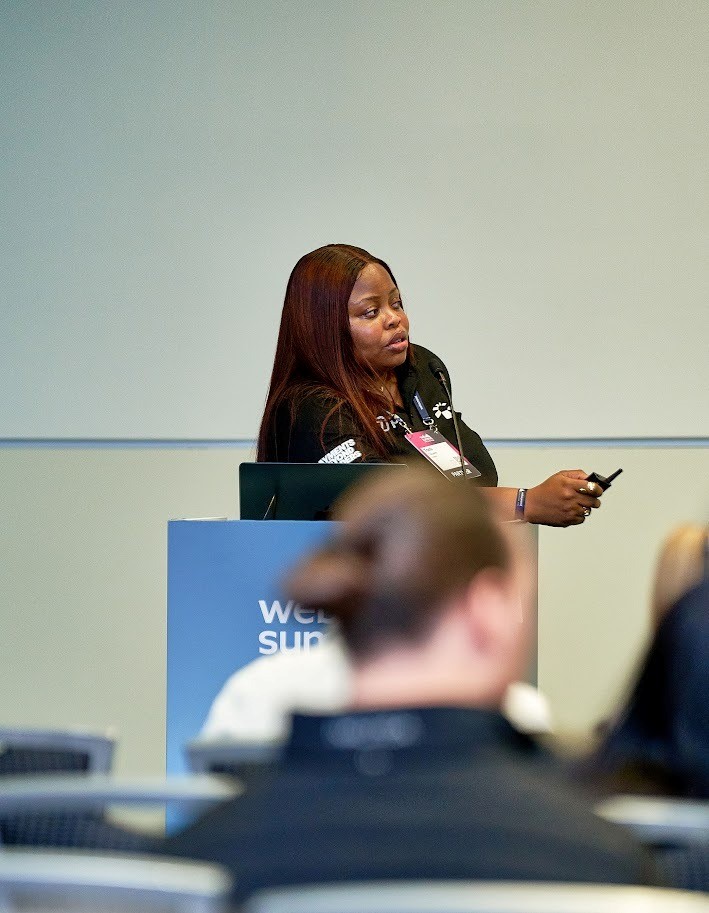
    Speaking at the Masterclass Session titled “Building a Fintech that Funds Itself; 1.8M + Users Later”, Tomisin emphasised how the company was intentional from inception about growing the business organically, slowly but steadily. They did not see the need to pursue funding rounds just for validation, as “your customers are your first investors”.  

    [Tomisin Oduyemi, Growth Lead at Cardtonic, speaking at a Masterclass Session, Web Summit Vancouver, 2026] 

    “This isn’t a talk about being anti-VC. It’s about understanding when revenue is smarter fuel than external capital and what it takes to build that way”, cited Tomisin in her opening speech.

    About how Cardtonic evolved into a multiproduct SuperApp, she noted how none of the consecutive product launches was in the initial plan. “Each product we added answered the same question our founders asked on day one: how does this bring in money? And more importantly, does this solve a real problem for someone who is trying to participate in the global economy but keeps hitting a wall?” Their adherence to their first principle on organic business growth ensured consistent results across the different products.

    From Self-Sustenance to Strategic Fundraising: Pil’s $2.1M Fundraising 

    Cardtonic recently raised $2.1M for its latest spin-off, Pil, a B2B spend-management platform aimed at helping startups and global enterprises create and distribute multi-currency virtual cards with pre-set spending limits to employees for specific needs like software subscriptions and ad campaigns.

    This funding round does not signify a diversion from their original investment principle. Instead, it was a sharp acumen of knowing “when to consider external funding and when to walk away from it”. For Pil, it was about diagnosing a problem where “capital was the cheaper/better alternative”. As noted by Tomisin during the speech, “We could’ve said no to raising for Pil but it needed compliance strength, liquidity, and the kind of infrastructural backbone that doesn’t come cheaply”.

    The funding round did not also follow the traditional pitch process as the investors were people who had always wanted to be a part of the Cardtonic story over the years, having observed their real-market utility and profitability. “The full amount came from angel investors who had seen our work up close for years. It was less of a business pitch and felt more like inviting people to be characters in a story they had read multiple times”.

    Closing Thoughts

    African fintechs are now taking a significant role in shaping global fintech conversations on sustainability. With their increased focus on real market value and profitability, they are challenging the new normal and redirecting the startup world away from overinflated valuations and back to fundamental market value.

    With Cardtonic’s practical model on self-funded financing and scale, they have proven that a fintech giant can be built through the core values of  discipline, operational resilience, and a customer-centric strategy. They have also positioned themselves as a template to always reference when it comes to discussing sustainable fintech growth on the global stage.